
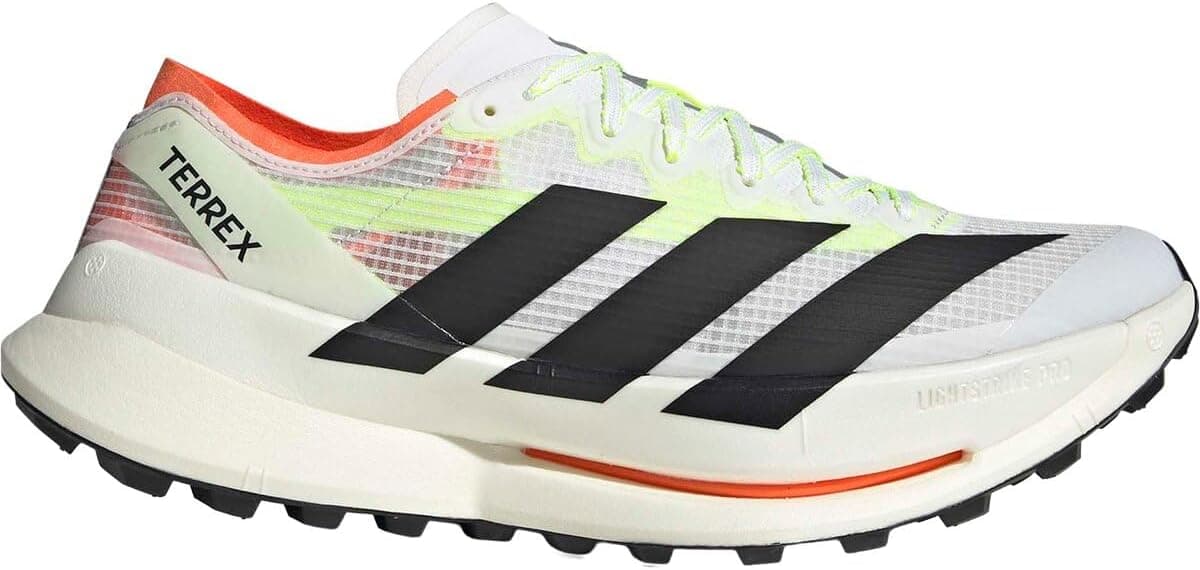


Adidas Terrex Agravic Speed Ultra 2 Review
An aggregated overview based on reviewer and runner feedback.
Disclaimer: AI was used to help provide an unbiased perspective on this topic, and all content was carefully fact-checked and edited by human running-shoe analysts. It reflects aggregated opinions from reviewers and runners and does not represent firsthand testing. Learn more →
Overview & Quick Verdict
The Adidas Terrex Agravic Speed Ultra 2 is the second generation of Adidas's flagship trail racer, and reviewers position it as the closest thing on the market to a road super shoe built for dirt. It pairs a full-length Lightstrike Pro midsole with a set of TPE Energy Rods and one of the most aggressively rockered geometries in the category, aimed squarely at fast, runnable trail and gravel racing.
The consensus on the ride is strong: reviewers describe it as fast, propulsive, and unusually energetic for a trail shoe, with a forward-rolling character that rewards runners who stay light and quick on their feet. Version two keeps the core identity of the original while addressing its most-cited complaints, softening the foam slightly, reworking the upper, and deepening the lugs.
Where opinion fractures is on who can actually use it. The same geometry that makes the shoe feel fast also makes it demanding — the platform is narrow through the heel and midfoot, and reviewers repeatedly note that heel strikers and runners on technical terrain will find it unstable. It is a specialist's tool rather than an all-terrain trail shoe, and buyers should weigh their footstrike and terrain carefully.
Key Stats
- Brand: Adidas
- Model: Terrex Agravic Speed Ultra 2
- Category: Neutral trail racing shoe / trail super shoe
- Terrain: Runnable and non-technical trail, gravel, and fire roads
- MSRP: $225
- Weight: 265 g / 9.3 oz brand-stated (men's US 9); ~269 g / 9.5 oz lab-measured
- Stack Height: Adidas lists ~43–44 mm heel / 35–36 mm forefoot; independent lab measurement recorded ~30.7 mm / 30.6 mm (see Ride & Feel)
- Drop: 8 mm official; ~0.1 mm lab-measured
Best For / Not Ideal For
Best For
- Midfoot and forefoot strikers with efficient running mechanics
- Fast, runnable trail racing from marathon to 100K distances
- Gravel roads, fire roads, and rolling non-technical singletrack
- Runners who want a trail equivalent of a road super shoe
- Competitive runners chasing PRs on groomed or moderate terrain
- Narrow to medium feet that benefit from a locked-in race fit
Not Ideal For
- Heel strikers, who lose the benefit of the rocker and gain instability
- Runners on technical, rocky, or off-camber alpine terrain
- Races with significant hiking rather than continuous running
- Wide feet or runners who need room for late-race toe splay
- Anyone wanting a versatile, do-everything daily trail trainer
- Value-focused buyers and runners needing deep-mud traction
Pros
- Reviewers consistently describe an exceptionally fast, propulsive ride, with many calling it one of the most road-like and energetic trail racers currently available.
- The shoe is light for its cushioning level, and testers report effortless turnover and a genuine race-day feel that flatters faster paces.
- The reworked mono-mesh upper resolves several version-one complaints, delivering more secure midfoot lockdown, a truer-to-size fit, and a softened heel that addresses prior rubbing issues.
- Breathability draws frequent praise, with lab testing placing it well above the trail-shoe average and reviewers noting a cool-running, quick-draining upper.
- The Continental outsole is highly durable, with lab abrasion testing recording minimal material loss, and the deeper lugs improve grip over the original on runnable surfaces.
- The full-length Lightstrike Pro midsole delivers high measured energy return, and reviewers note the foam stays consistent even in cold conditions.
Cons
- The ride demands efficient mechanics, working best for midfoot and forefoot strikers and feeling notably less forgiving for those who land on the heel.
- Stability is limited by the narrow rearfoot and midfoot platform combined with the tall, heavily rockered geometry, which reviewers flag on uneven or technical ground.
- The fit is snug and low-volume, and runners with wider feet or those whose feet swell late in ultras may find the toe box constrictive.
- Several testers report the tongue can bunch at its base when the laces are tightened, occasionally requiring a quick adjustment before setting off.
- At $225, the price is repeatedly identified as a drawback, and the upper's abrasion durability tested below average.
- The shoe omits reflective elements, an odd gap for a model built for ultra efforts that can run into low-light hours.
Ride & Feel
The defining trait of the Agravic Speed Ultra 2 is its rocker. Adidas prints a 30-degree heel angle on the midsole, and reviewers note the shoe curves more at the heel than many trail shoes do at the forefoot, producing an aggressively forward-rolling sensation that testers describe as either exhilarating or polarizing.
That geometry also explains the stack-height confusion around this shoe. Adidas lists a tall figure in the 43–44 mm range at the heel, but independent lab measurement at standard points recorded only about 30.7 mm because the rocker lifts the rearfoot off the ground where the measurement is taken. The result is a lab-verified near-zero drop that most reviewers agree feels dynamically like a low-to-moderate 3–6 mm drop on the run, provided you land ahead of the heel.
The updated Lightstrike Pro is tuned slightly softer than the original, and reviewers characterize the ride as bouncy and powerful rather than plush or mushy. Testers describe it as controlled and immediately propulsive, a foam that rewards effort and sustains momentum as fatigue sets in over long efforts.
Fit & Comfort
Sizing on version two is widely reported as corrected and closer to true to size, resolving one of the most common frustrations with the original. Reviewers describe a fitted rather than roomy feel, with the upper holding the midfoot and heel securely through a deliberately narrow profile.
The toe box is where the race-oriented design shows its tradeoffs. Lab measurement places it on the narrow side of the category, and reviewers note that while this aids precision on trail, it offers limited space for toe splay and can feel restrictive on longer efforts as feet swell. Runners with wider feet are consistently steered toward roomier alternatives.
Comfort improvements over v1 are a recurring theme, centered on the reworked upper, added tongue padding, and a softer heel collar that reduces prior rubbing. The main comfort caveat is the occasional tongue bunching at the base, which several testers mention but treat as a minor rather than disqualifying issue.
Support & Stability
Stability on this shoe is best understood as strike-pattern dependent rather than uniformly good or bad. Lab measurements show a very wide forefoot platform paired with a markedly narrow heel and midfoot, so landing on the front of the shoe feels planted while landing toward the rear feels precarious.
For midfoot and forefoot strikers with strong ankle stability, reviewers report the shoe feels supportive and guided, with the broad forefoot and firm-yet-flexible rod system controlling the ride. The heel counter is intentionally minimal, which reinforces the shoe's racing intent but offers little structure for runners who need rearfoot support.
The consensus caution is technical terrain. The combination of tall stack, narrow rearfoot, and radical rocker leads multiple reviewers and community voices to describe the shoe as unstable on rocky, off-camber, or highly uneven ground, and to recommend more traditional geometries for those conditions.
Traction & Durability
The Continental rubber outsole is one of the shoe's clearest strengths after the midsole. Reviewers credit it with confident grip on both wet and dry runnable surfaces, and the deeper lugs on version two improve traction over the original, though the shoe remains best suited to firm and moderate trail rather than deep mud.
Outsole durability tested exceptionally well, with lab abrasion measurement recording among the lowest material loss in its class, consistent with Continental's broader reputation for longevity. This is a shoe whose sole is likely to outlast the softer components above it.
The upper is the durability weak point. Abrasion testing of the toe box and heel padding came in below the category average, which reviewers attribute to the thin, breathable construction and note is less of a concern given the shoe's intended use on smooth, non-technical terrain.
Energy Return & Performance
Independent lab testing recorded energy return figures of roughly 64.5% at the heel and 70.2% at the forefoot, high marks that reflect the full-length Lightstrike Pro foam. Reviewers note these numbers fall short of Adidas's road super shoes primarily because of the heavier rubber outsole coverage required for trail, a reasonable tradeoff for the terrain.
On the run, that performance translates into a shoe reviewers describe as genuinely fast, with the rocker and rods combining to make sustaining hard trail paces feel measurably easier. The plate-free rod system keeps the ride flexible enough to adapt to terrain while still driving efficient transitions.
Opinion divides on where the shoe performs best across distance. Some reviewers frame it as an excellent choice for fast ultras with continuous running, while others argue the aggressive geometry becomes taxing late in very long or hiking-heavy races and is better exploited over shorter, faster efforts. Both camps agree the shoe is optimized for running rather than power-hiking.
Conclusion
The Adidas Terrex Agravic Speed Ultra 2 is a sharpened version of an already-distinctive racer, and the updates land where they were most needed. The softer foam, reworked upper, corrected sizing, and deeper lugs address the original's biggest complaints without diluting the fast, propulsive character that earned the platform its following.
What has not changed is the shoe's specialization. The narrow platform, minimal heel structure, and radical rocker make it demanding of footstrike and terrain, and reviewers are consistent that heel strikers, wide-footed runners, and technical-terrain specialists should look elsewhere. This is a purpose-built race shoe, not a versatile trainer, and its instability off-camber is the price of its speed.
For the runner it targets — an efficient midfoot or forefoot striker racing fast, runnable terrain — the aggregated verdict is strongly positive. It is expensive and narrow in its ideal use case, but within that case reviewers regard it as one of the most exciting and capable trail racers available.
Alternatives to Consider
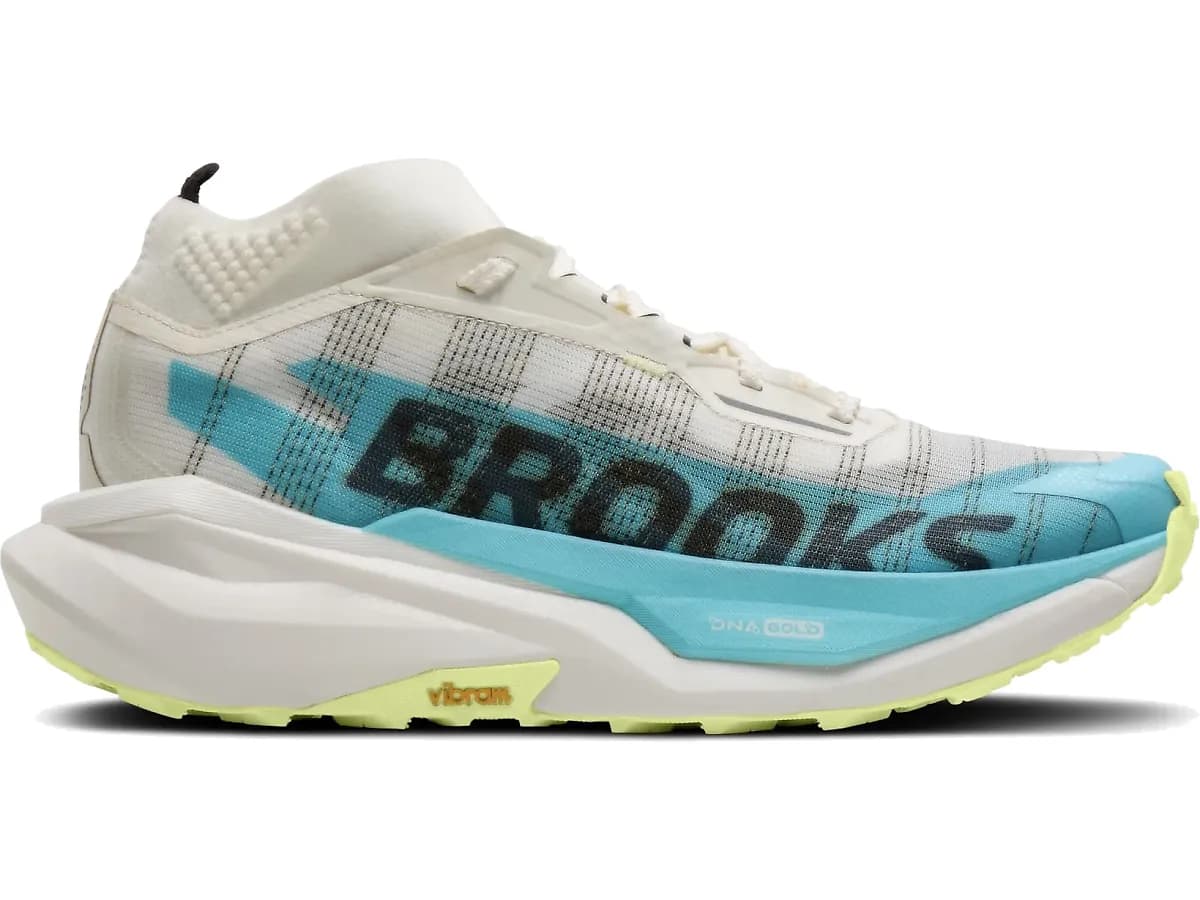
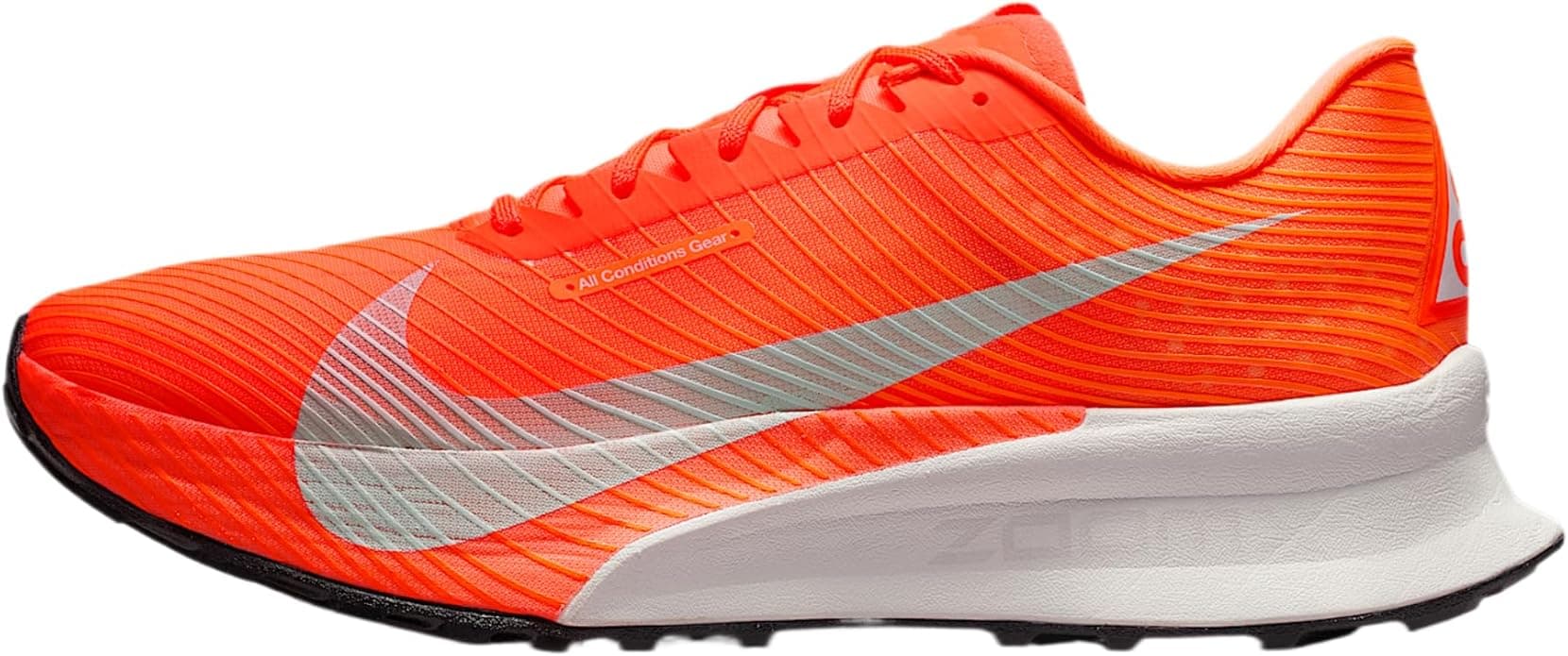
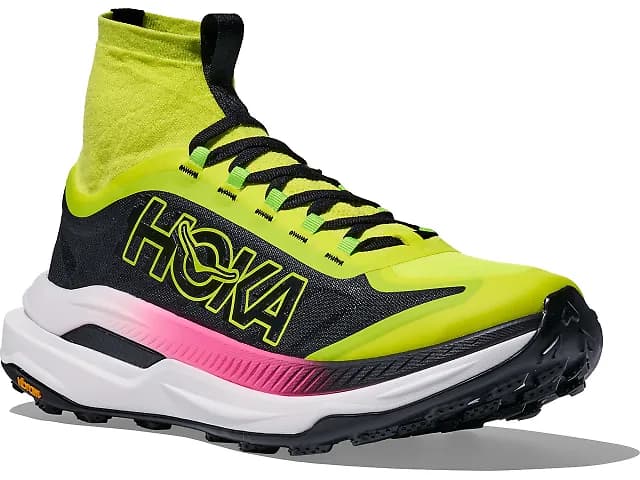
Not quite the right fit? Here are some shoes worth comparing.
Frequently Asked Questions
It can be, with an important qualifier. Reviewers agree it excels on fast, runnable ultras where you stay in a continuous running rhythm, and the softer version-two foam extends its comfort over distance. However, its aggressive geometry and narrow platform make it less suited to mountainous ultras with heavy hiking or technical terrain, and some reviewers argue it is actually better optimized for shorter, faster efforts.
No. Instead of a carbon plate, it uses an X-shaped system of TPE Energy Rods embedded in the Lightstrike Pro midsole. Reviewers note this setup provides propulsion and some structure while keeping the ride more flexible and adaptable to uneven terrain than a full carbon plate would.
This is genuinely confusing. Adidas lists the stack in the 43–44 mm heel range with an 8 mm drop, but independent lab measurement recorded roughly 30.7 mm at the heel and a near-zero measured drop, because the aggressive rocker lifts the rearfoot off the ground at the standard measurement point. In practice, most reviewers say it feels like a low-to-moderate 3–6 mm drop shoe for midfoot and forefoot strikers.
Reviewers generally report that version two corrected the sizing inconsistencies of the original and now fits close to true to size. The fit is snug and low-volume by design, so runners with wide feet or high insteps may find it restrictive and should try it on or consider a roomier alternative.
Most reviewers say no. The narrow rearfoot platform, minimal heel counter, and steep heel rocker make the shoe feel unstable for runners who land on their heels, and the propulsive benefits of the design only engage when landing farther forward. Heel strikers are consistently pointed toward more traditional, stable trail racers.
The Continental outsole grips well and is very durable, and version two's deeper lugs improve confidence over the original on runnable surfaces. That said, the lugs remain moderate in depth, and reviewers agree the shoe is best on firm, gravel, and rolling non-technical trail rather than deep mud or highly technical rock, where both traction and platform stability become limiting.
Key Sources
RunRepeat — https://runrepeat.com/adidas-terrex-agravic-speed-ultra-2
Believe in the Run — https://believeintherun.com/shoe-reviews/adidas-terrex-agravic-speed-ultra-2-review/
Road Trail Run (Multi-Tester) — https://www.roadtrailrun.com/2026/02/adidas-terrex-agravic-speed-ultra-2.html
Road Trail Run (2026 Line Preview) — https://www.roadtrailrun.com/2025/11/adidas-terrex-2026-previews-agravic.html
Running Warehouse — https://www.runningwarehouse.com/reviews/adidas-shoe-reviews/adidas-terrex-agravic-speed-ultra-2.html
Running Warehouse (Product / User Reviews) — https://www.runningwarehouse.com/adidas_Terrex_Agravic_Speed_Ultra_2/descpage-ATASM1.html
Women's Running UK — https://www.womensrunning.co.uk/gear/shoes/adidas-agravic-speed-ultra-2-review/
The Run Testers (YouTube) — https://www.youtube.com/watch?v=wd7F2kyQBlA
Believe in the Run (YouTube) — https://www.youtube.com/watch?v=IJ_6GdW6Zaw