
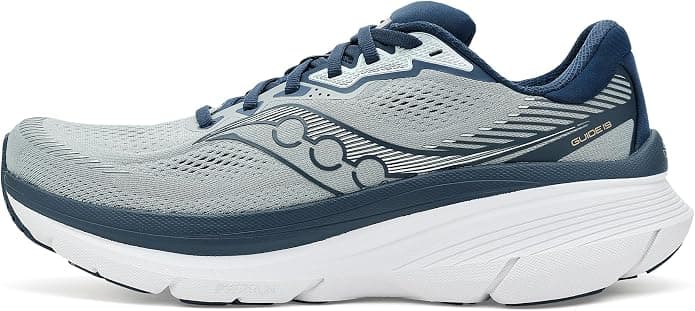


Saucony Guide 19 Review
An aggregated overview based on reviewer and runner feedback.
Disclaimer: AI was used to help provide an unbiased perspective on this topic, and all content was carefully fact-checked and edited by human running-shoe analysts. It reflects aggregated opinions from reviewers and runners and does not represent firsthand testing. Learn more →
Overview & Quick Verdict
The Saucony Guide 19 is the latest iteration of Saucony's long-running stability series, and it arrives in March 2026 with a clear directional statement: the Guide is now a max-cushion stability shoe, not just a stability shoe. The two headline changes are a reformulated PWRRUN EVA midsole — softer and livelier than what was in the Guide 18 — and a significantly expanded XT-900 carbon rubber outsole that addresses the durability complaints that followed the Guide 17 and 18 through their entire life cycles.
Across lab reviewers, enthusiast outlets, and retail testers, the consensus holds that Saucony has delivered a more comfortable, more durable shoe than its predecessors without fundamentally changing what the Guide is. The CenterPath stability system — wide base, high sidewalls, asymmetric geometry, and rocker shape — remains intact, and the shoe continues to provide guidance through geometry rather than a traditional medial post or dual-density foam. For runners who want easy miles handled quietly and reliably, the Guide 19 earns broadly positive marks.
Where the picture fractures is on the foam itself. Some reviewers describe the updated PWRRUN as a meaningful improvement — softer, bouncier, and more protective — while others found the midsole too soft to the point of feeling dead and unresponsive. Weight is the other recurring tension: the outsole upgrade adds grams, and while that tradeoff is accepted by most as reasonable given the durability benefit, several reviewers miss the lighter feel of the Guide 17.
Key Stats
- Brand: Saucony
- Model: Guide 19
- Category: Max-cushion stability daily trainer
- Terrain: Road
- MSRP: $150
- Weight: 9.7 oz / 275g (men's US 9) · 8.9 oz / 252g (women's US 8) (brand spec; one lab source measured 298g on a men's sample)
- Stack Height: 35 mm heel / 29 mm forefoot (per Doctors of Running, Road Trail Run, and official Saucony data; isolated sources list slightly higher figures)
- Drop: 6 mm
Best For / Not Ideal For
Best For
- Runners with mild to moderate overpronation who want geometry-based guidance rather than a rigid medial post
- Easy runs, recovery runs, long slow runs, and walking
- High-mileage training blocks where durability and consistent protection matter more than versatility
- Runners with average to wide feet, particularly those needing volume in the toe box
- Heavier runners or those seeking a cushioned, stable platform that absorbs road impact
Not Ideal For
- Runners wanting a lively, energetic, or bouncy daily trainer
- Speed work, tempo runs, or interval training
- Runners who need strong overpronation correction — the stability here is mild and guidance-based
- Those sensitive to heavier or bulkier shoes underfoot
- Hot-weather runners who tend to run warm — the thicker mesh upper retains more heat than its predecessor
Pros
- Outsole durability is genuinely improved. The expanded XT-900 carbon rubber coverage is a direct fix for the well-documented wear issue on the Guide 17 and 18, where exposed foam showed visible degradation within 100–250 miles. Early testers report minimal wear after significant mileage.
- Unobtrusive, effective stability. CenterPath geometry — a wide 110mm heel platform, high sidewalls, and an asymmetric rocker — guides the foot without any intrusive correction feel. Multiple sources describe the stability as "invisible" until it's needed.
- Roomy, accommodating fit. The engineered stretch mesh upper and generous toe box work well for average to wider feet, and the shoe is consistently reported true to size with good vertical volume.
- Excellent step-in comfort. Saucony's premium sockliner and updated mesh create a plush, ready-to-run feel from the first wear, with zero required break-in period across reviewer reports.
- Reformulated PWRRUN is softer and more protective than the Guide 18. The updated compression-molded EVA delivers noticeably more cushioning underfoot, pushing the Guide firmly into max-cushion territory for easy and long runs.
- Strong value for the category. At $140, the Guide 19 undercuts many comparable stability daily trainers while delivering a durability and comfort package that reviewers consistently describe as well-priced.
Cons
- Low energy return. PWRRUN (plain EVA) lacks the pop or spring of modern nitrogen-infused or TPU-based foams. Most reviewers accept this as a category characteristic, but it is a consistent limitation across all sources.
- Heavier than its predecessors. The outsole upgrade brings the men's weight to 9.7 oz — meaningfully heavier than the Guide 17 — and several reviewers note the shoe can feel even heavier than its spec suggests on the foot.
- Strictly a cruiser — poor versatility for faster efforts. The Run Testers, Believe in the Run, and NextGait all describe the Guide 19 as flat and sluggish when runners try to pick up the pace; it is not a shoe that transitions well from easy to moderate or fast training.
- Upper runs warm. The thicker engineered mesh is noticeably warmer than the Guide 18's upper, flagged as a concern by multiple reviewers for year-round or warm-climate use.
- Mild stability only. Runners who need meaningful overpronation correction will find the geometry-based guidance insufficient; the shoe functions closer to a guided-neutral trainer on the run.
- Slight midfoot lockdown gap. Doctors of Running note a minor midfoot drift for narrower feet — the adaptable mesh accommodates width well but doesn't lock down as firmly as some stability runners prefer.
Ride & Feel
The defining change from the Guide 18 to the 19 is the reformulated PWRRUN midsole, and its effect on the ride is real. Road Trail Run and Alastair Running both describe the foam as noticeably softer and more protective underfoot compared to prior versions, pushing the shoe into territory that earns its "max-cushion" framing. The stack height remains 35mm/29mm, but the ride feels deeper — an effect of the foam compound revision rather than any dimensional change.
The rocker geometry and wide platform work together to produce a smooth, rolling transition through the stride. At easy paces, the ride is consistently described as predictable, planted, and comfortable — the kind of shoe that disappears underfoot when effort is low. The Run Testers summarise this as a shoe that "rolls through nicely and feels consistent at easy paces," requiring little conscious attention from the runner.
The significant caveat here is one of the sharpest disagreements in the review ecosystem. Believe in the Run found the softer PWRRUN too compliant — describing it as having "no pop, no life, no energy" and crossing out of the Goldilocks zone of comfort and responsiveness. Most other sources frame the same softness as a feature for its intended use case; the disagreement is real and likely reflects differences in expected pace range and running style.
Fit & Comfort
Fit is consistently reported as true to size across all major review sources, with a wider, more accommodating feel than many stability competitors. The toe box offers notable width and vertical volume, which Running Warehouse describes as "a dream for flatter, wider-footed runners" and which multiple reviewers credit for comfortable long-run performance without toe crowding. Narrower-footed runners may find the midfoot slightly roomy, with Doctors of Running specifically noting a minor midfoot drift on narrower feet.
The upper package — plush heel collar, moderately padded tongue, flat laces with reinforced eyelets — is broadly praised for step-in comfort and pressure-free locking. The stretch mesh adapts to different foot shapes and requires no break-in period. The one consistent negative is warmth: the updated mesh is thicker than the Guide 18's upper, and reviewers including Believe in the Run and Alastair Running flag it as noticeably warmer, a concern for summer use or runners who tend to run hot.
Support & Stability
The Guide 19 uses CenterPath Technology — Saucony's geometry-based approach to stability, introduced in the Guide 17 — rather than a traditional medial post or dual-density foam insert. The system combines a wide platform (110mm heel / 90mm midfoot / 120mm forefoot), high sidewalls that cradle the foot in the midsole, and a rocker design that guides forward progression. Doctors of Running characterise the result as a "mild guidance/stability" feel on the run — closer to a guided-neutral experience than an aggressively corrective one.
For runners with mild to moderate overpronation, reviewers consistently describe the support as effective and natural. The Run Testers note the stability is "subtle and only really noticeable if you need it," which is the design intent. Running Warehouse goes further, suggesting the Guide series has evolved to the point where it functions as a well-cushioned neutral shoe with inherent geometric stability rather than a traditional support shoe. Runners with meaningful pronation control needs may find this framing either liberating or insufficient, depending on what they require from their footwear.
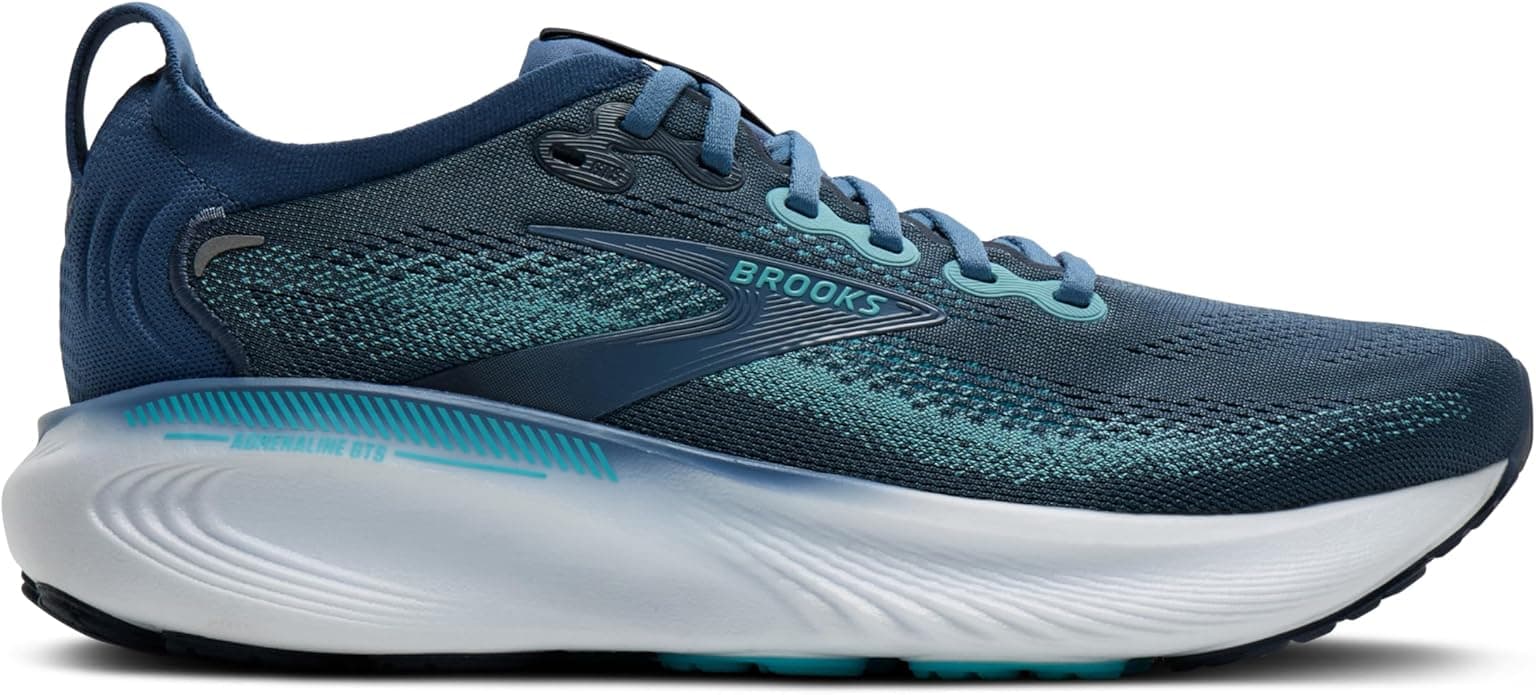
The important limitation flagged by multiple sources is ceiling: the Guide 19's stability is not appropriate for runners who need significant medial support or strong correction. Doctors of Running list it as best for "fairly mild stability needs," and those requiring more structured intervention are directed toward shoes like the Brooks Adrenaline GTS.
Traction & Durability
The outsole upgrade is one of the Guide 19's clearest wins relative to its predecessors. Expanded XT-900 carbon rubber coverage addresses the well-documented wear problem on the Guide 17 and 18, which exposed foam sections showed premature degradation — visible grinding on lateral heels by 250km in some cases. Early Guide 19 testers report minimal outsole wear after comparable mileage, with NextGait projecting a 500–600km lifespan based on early wear rates.
Traction on dry and wet road surfaces is described as reliable and predictable across sources. Road Trail Run notes the multi-directional rubber segmentation in the forefoot promotes flexibility while maintaining grip. The trade-off for the durability upgrade is a small weight penalty: the additional rubber coverage is cited by multiple sources as the primary reason the Guide 19 is heavier than the Guide 17 and 18, with Road Trail Run noting that some of the rubber coverage on the toe is "a bit overdone" and adds weight without being fully used in normal gait patterns.
Energy Return & Performance
PWRRUN is compression-molded EVA — not nitrogen-infused, not TPU-based, and not positioned as an energy-returning foam. This is a deliberate choice by Saucony: EVA at this price point and category is firmer, more predictable, and more durable than the super foams proliferating at higher price points, and it provides a stable base for the CenterPath geometry to function correctly. Reviewers across all sources accept this framing for the shoe's intended purpose, but it means the Guide 19 offers no measurable rebound or energy return benefit compared to modern alternatives.
Performance versatility is narrow by design. The Guide 19 functions well and consistently for easy runs, recovery runs, and long slow miles. At faster efforts — tempo runs, intervals, or anything approaching race pace — the foam compresses without springing back, and the shoe's weight becomes a liability. The Run Testers describe it as "quite limited" in this regard, and NextGait specifically tested the shoe during 6×1km interval sessions, finding it "heavy and unresponsive" at 4:45–5:00/km pace. This is not a flaw within the shoe's design intent, but it is a firm constraint on the type of training it supports.
Final Verdict
The Saucony Guide 19 does what it sets out to do, and it does it better than the Guide 17 or 18 in the areas that matter most for high-mileage daily training. The outsole durability upgrade alone removes the biggest recurring criticism of the CenterPath-era Guide, and the softer PWRRUN foam improves everyday comfort without compromising the stable, centered ride that long-time Guide users rely on. At $140, the value proposition is strong for the category.
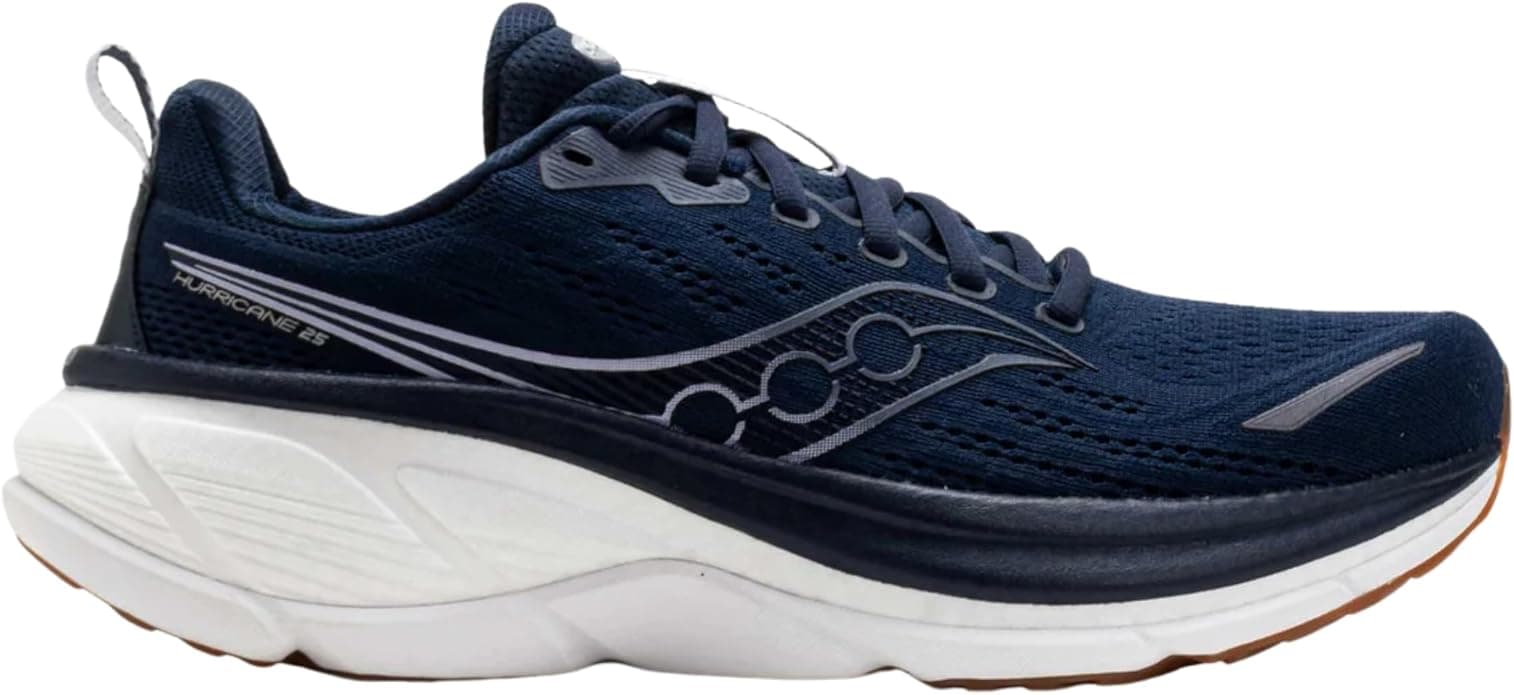
The honest constraints are equally clear: this is not a shoe that rewards pace, offers energy return, or stretches into versatile training territory. The PWRRUN foam is predictable and protective, but it is EVA — and in a market increasingly defined by bouncy TPU and PEBA foams, that feels like a ceiling rather than a foundation. Runners who want the Guide's stability and platform but with more life underfoot will find the Hurricane 25 (PWRRUN chassis with a softer compound) or the Tempus a more energetic alternative within the Saucony lineup.
For its target runner — someone who wants easy miles handled quietly, comfortably, and durably, with gentle guidance and no drama — the Guide 19 is a reliable, well-executed choice.
Alternatives to Consider
Not quite the right fit? Here are some shoes worth comparing.
Frequently Asked Questions
Yes, for easy and long training days. The Guide 19's cushioned, stable platform handles recovery runs and long slow miles well, and its durability makes it a reliable high-mileage trainer. It is not suitable for tempo runs or workout days — pairing it with a more versatile or faster shoe for those sessions is recommended.
No. The Guide 19 uses a plain PWRRUN compression-molded EVA midsole with no plate of any kind. Its stability comes entirely from CenterPath geometry — a wide base, high sidewalls, and asymmetric midsole design — rather than any structural insert or plate.
The Guide 19 uses a softer, updated PWRRUN foam that makes the ride more comfortable and protective for easy miles. The most significant practical change is the expanded XT-900 outsole coverage, which addresses the premature wear problems documented on the Guide 17 and 18. The trade-off is a slight weight increase. The stability system and overall platform shape remain largely the same.
Yes. Reviewers across all major sources consistently report the Guide 19 runs true to size in length, with a roomy and accommodating feel through the midfoot and toe box. Runners with narrower feet may find the midfoot slightly generous; those with wider feet or high-volume feet will find the fit particularly well suited.
It depends on the degree of overpronation. The Guide 19 provides mild, geometry-based guidance — effective for runners with mild to moderate overpronation who want a supportive feel without aggressive correction. Runners with significant overpronation who need structured medial support will likely find it insufficient and should consider options like the Brooks Adrenaline GTS 25 or ASICS Kayano.
CenterPath is Saucony's name for the geometry-based stability system introduced in the Guide 17. It combines a wider-than-average midsole platform, elevated sidewalls that cradle the foot inside the foam, and an asymmetric rocker shape to guide the foot through a neutral stride path. It does not use a traditional medial post or dual-density foam — the stability effect comes from the shape and width of the midsole rather than from harder or denser materials.
Key Sources
Doctors of Running — https://www.doctorsofrunning.com/2026/01/saucony-guide-19-review-2026.html
Believe in the Run — https://believeintherun.com/shoe-reviews/saucony-guide-19-review/
Road Trail Run (Multi-Tester) — https://www.roadtrailrun.com/2025/11/saucony-guide-19-review.html
Road Trail Run (Gentle Support) — https://www.roadtrailrun.com/2025/12/saucony-guide-19-review-gentle-support.html
The Run Testers — https://theruntesters.com/running-shoes/saucony-guide-19-review-from-two-runners/
Running Warehouse — https://www.runningwarehouse.com/reviews/saucony-shoe-reviews/saucony-guide-19.html
Alastair Running — https://www.alastairrunning.com/saucony-guide-19-review/
Run to the Finish — https://runtothefinish.com/saucony-guide-19-review/
Running Lab Store — https://runninglabstore.com/blogs/news/saucony-guide-19
NextGait — https://nextgait.com/saucony-guide-review/
RunningXpert — https://www.runningxpert.com/en/inspiration/test-saucony-ride-19-vs-guide-19
RunRepeat — https://runrepeat.com/saucony-guide-19
Saucony (Official) — https://www.saucony.com/en/guide-19/60838M.html