
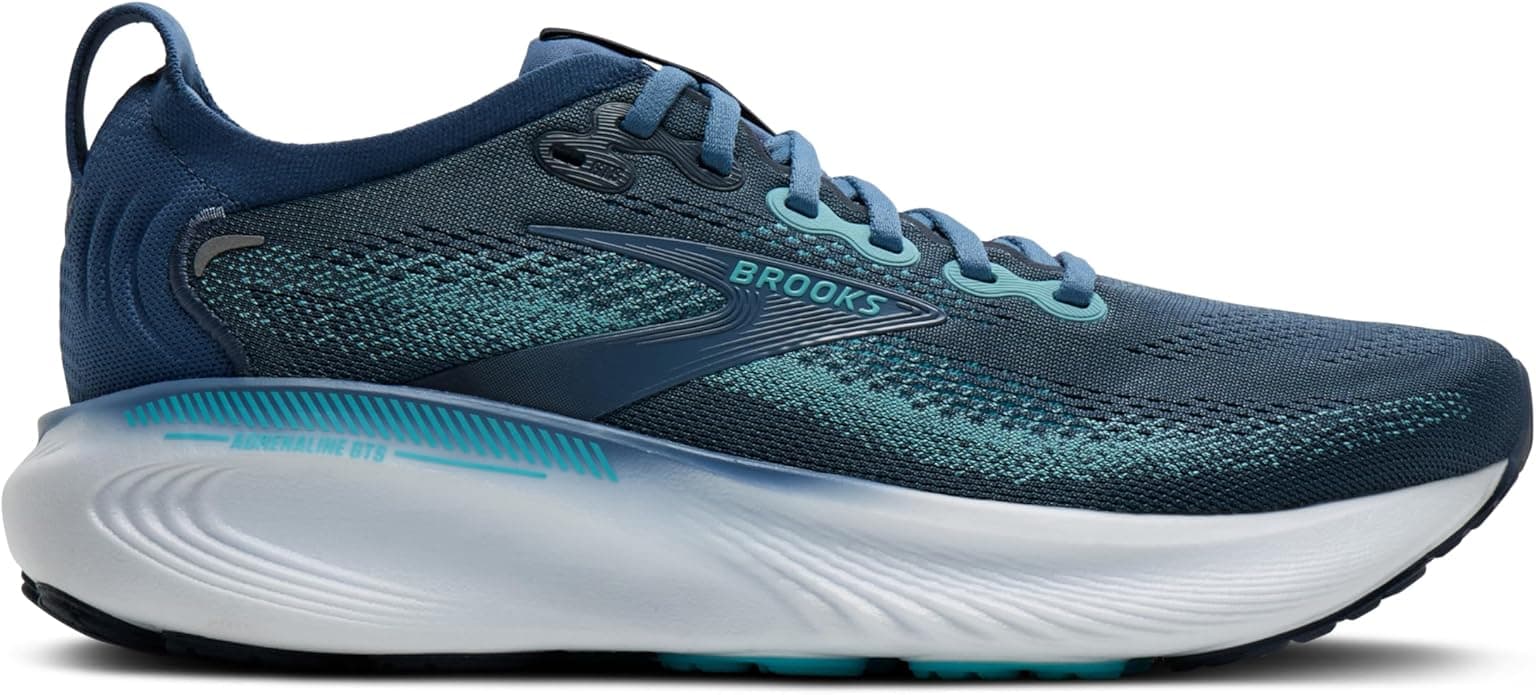


Brooks Adrenaline GTS 25 Review
An aggregated overview based on reviewer and runner feedback.
Disclaimer: AI was used to help provide an unbiased perspective on this topic, and all content was carefully fact-checked and edited by human running-shoe analysts. It reflects aggregated opinions from reviewers and runners and does not represent firsthand testing. Learn more →
Overview & Quick Verdict
The Brooks Adrenaline GTS 25 marks the 25th edition of one of the best-selling stability trainers in running history — and it arrives with the most consequential spec changes the line has seen in years. Brooks dropped the heel-to-toe offset from 12mm to 10mm, added 3mm of DNA Loft v3 foam in the forefoot and 1mm in the heel, and redesigned the outsole geometry. The result, across nearly every independent review source, is the smoothest, most refined version of the Adrenaline to date.
The core identity of the shoe is unchanged. GuideRails holistic support, a protective and durable build, and a ride tuned for comfort over excitement are all present and accounted for. What has shifted is the execution: the heel transition is more fluid, the foam is measurably softer, and the fit is more accommodating than in recent versions. For the Adrenaline's loyal audience, that reads as a genuine upgrade.
There is one notable split in the review ecosystem. A tester at Believe in the Run found the DNA Loft v3 uncomfortably firm after 50 miles, while his co-reviewer at the same publication — and the clear majority of other sources, including RunRepeat, WearTesters, Doctors of Running, and Fleet Feet — describe the ride as noticeably cushioned and softer than the GTS 24. That disagreement reflects how differently this shoe can land depending on runner weight, pace, and expectation. For most of its intended users, the consensus is clear: dependable, protective, and a meaningful step forward.
Key Stats
- Brand: Brooks
- Model: Adrenaline GTS 25
- Category: Moderate stability daily trainer / road running / walking
- Terrain: Road
- MSRP: $155
- Weight: 10.6 oz / 301g (men's US 9, official); 10.4 oz / 295g (RunRepeat lab); 9.5 oz / 269g (women's US 8, official)
- Stack Height: 37mm heel / 27mm forefoot (official); 36.1mm / 25.9mm (RunRepeat lab)
- Drop: 10mm (reduced from 12mm on GTS 24)
Best For / Not Ideal For
Best For
- Mild to moderate overpronators who want non-intrusive, holistic stability
- Daily easy and recovery runs
- Heel strikers who benefit from a well-cushioned rearfoot
- Walkers, all-day wearers, and those who spend long hours on their feet
- Beginners and intermediate runners seeking a protective, dependable trainer
- Runners who found the GTS 24 too firm
- Those requiring diabetic-certified or APMA-approved footwear
Not Ideal For
- Neutral runners or supinators who do not need medial support
- Speed-focused runners doing tempo work, intervals, or racing
- Runners who depended on the 12mm drop for Achilles accommodation
- Hot-weather runners who prioritise breathability
- Those wanting a lively, energetic midsole feel
- Lightweight-trainer seekers — the Brooks Hyperion line is a better fit within the brand
Pros
- GuideRails remains one of the best holistic stability systems in the category. Sources including Believe in the Run, Doctors of Running, Road Trail Run, and Fleet Feet describe it as non-intrusive and balanced, guiding the foot without forcing correction or obstructing natural pronation.
- Best heel transition in Adrenaline history. Doctors of Running credits the improved posterolateral heel bevel and the new 10mm drop with producing a smoother, more controlled heel-to-midfoot movement than any previous version of the shoe.
- Measurably softer than the GTS 24. RunRepeat's lab durometer test found the foam approximately 27% softer than last year's tune; this is confirmed on-foot by Running Shoes Guru, RunToTheFinish, Road Trail Run, Fleet Feet, WearTesters and Marathon Sports.
- Strong durability signals. The thick RoadTack outsole shows negligible wear past 100+ miles across multiple long-term testers, and retailer sources project a 400–500 mile lifespan — though that range is not yet confirmed by published long-term tests at time of writing.
- Improved wet-road traction. RunRepeat's lab recorded a friction score of 0.61 on wet concrete, up from 0.48 on the GTS 24, attributed to the redesigned outsole geometry and rubber compound placement.
- Exceptional for walking and all-day wear. Fleet Feet, Doctors of Running, WearTesters, and consumer reviews across REI and Zappos consistently highlight the shoe as a standout option beyond running. Its PDAC A5500 Diabetic certification further underscores its suitability for extended on-feet use.
- Breaks in immediately. Multiple reviewers — including Running Shoes Guru and Road Trail Run — note the shoe feels more worn-in out of the box than past Adrenalines, reducing the typical new-shoe stiffness period.
Cons
- Heavy for a modern daily trainer. At 10.6 oz officially (10.4 oz in RunRepeat's lab), the GTS 25 sits above most competing daily trainers; RunRepeat, WearTesters and Meta Endurance all flag weight as a persistent weakness relative to the broader market.
- Low energy return limits versatility. RunRepeat lab recorded 52.1% energy return at the heel and 59.2% at the forefoot — below the current daily trainer average. WearTesters, Fleet Feet, and Doctors of Running confirm on-foot: protection is the priority, not propulsion.
- Forefoot firms up over long miles. Doctors of Running specifically note that the forefoot cushioning becomes noticeably stiffer on efforts beyond 8–10 miles, which limits the shoe's comfort ceiling for marathon-pace long runs.
- No gusseted tongue. Road Trail Run, RunToTheFinish, and WearTesters all flag this as a missed opportunity; the tongue can shift slightly on longer runs despite the two anchor stays.
- The 10mm drop disappoints some longtime users. Runners who relied on the 12mm drop for Achilles relief have flagged the change as a dealbreaker in comment sections at Believe in the Run and in consumer reviews on Zappos, with several reporting they are stocking up on older versions instead.
- Upper runs warm and absorbs water. The thicker jacquard mesh is less breathable than the GTS 24's upper — flagged by Alastair Running and among others as a significant limitation in summer or humid conditions. In rain, the mesh soaks through quickly and adds weight, as noted by Believe in the Run and Meta Endurance.
- Price increased to $155. Multiple outlets, including Run Moore, note the ~$15 price increase — partly attributed to tariffs — as a meaningful drawback given that the technical updates are incremental rather than platform-level changes.
Ride & Feel
The GTS 25's ride is best described as controlled, cushioned, and deliberately unhurried. The additional foam depth in both the heel and forefoot creates a more consistent underfoot feel across the gait cycle, and the improved heel bevel makes first contact feel rounded and progressive rather than abrupt. RunRepeat's durometer testing confirms a 27% reduction in foam firmness versus the GTS 24, and that shift is perceptible on-foot across the majority of review sources.
At easy paces, the shoe earns its daily-trainer billing without qualification. The GuideRails engage passively, transitions are smooth, and the ride is predictable — adjectives like "dependable," "consistent," and "distraction-free" recur across Road Trail Run, Running Shoes Guru, Fleet Feet, and Northern Runner. For runners whose priority is getting miles done without thinking about their shoes, the GTS 25 delivers that promise reliably.
The ride's limits become apparent as pace increases. WearTesters note that energy return feels neutralized above a light jog, and Fleet Feet's team found themselves settling into easy efforts even when intending to push. This is not a flaw in the shoe's execution — it is a direct consequence of its design intent. Runners who accept the GTS 25 as a protection-first daily trainer will find it well-executed; those who want a shoe that rewards effort with propulsion should look elsewhere.
Fit & Comfort
Sizing is reported as true to size across the majority of sources, including Doctors of Running, Running Shoes Guru, and RunToTheFinish. Run Moore adds a useful nuance: the GTS 25 may run slightly longer than earlier Adrenalines, so runners who previously rounded up in this line may find their standard size works this time. Three width options for men and two for women extend the fit range, and reviewers with normal-width feet report a secure midfoot lockdown with adequate toe box room.
Upper comfort is broadly positive on step-in feel. The flat-knit heel collar and padded tongue provide cushioning with no immediate hotspots and sources align with the rest of the field in calling the fit accommodating and well-structured. The updated design also corrects what had been a recurring complaint about past Adrenalines running short or narrow, with the GTS 25 offering a more forgiving volume overall.
The one recurring fit concern is the novel heel collar construction. Running Shoes Guru flagged it as requiring an adjustment period, and a subset of consumer reviews on REI and Zappos mention slight ankle irritation after longer efforts. This is not universal — WearTesters found the upper accommodating across a range of foot shapes — but runners with Achilles sensitivity or narrow heels should be aware of it before committing to a purchase.
Support & Stability
The GuideRails system continues to be the Adrenaline's defining feature, and reviewers across sources describe it as holistic rather than prescriptive. Rather than a rigid medial post that forces the foot inward, GuideRails positions raised sidewalls on both edges of the midsole, allowing natural pronation while preventing excessive deviation. The effect, as Believe in the Run's Sam describes it, is a guide path rather than a brace — support that runs with you rather than against you.
Doctors of Running's DPT-level analysis reveals the support architecture in more detail: the GTS 25 uses midsole sculpting to reinforce the GuideRails effect, with a flared medial heel and a lateral cutout that increases compression on that side, slowing rearfoot pronation while facilitating natural toe-off. The medial post, which feels prominent during the first several runs, breaks in over roughly 30–40 miles to provide a consistent level of support that does not degrade over extended efforts.
One important note confirmed across Doctors of Running and Flawless Shoe Reviews: the support architecture is designed for pronators, not supinators. The medial-heavy design means runners who under-pronate may actually feel destabilised by the GTS 25, and those who heel-strike far laterally may find the lateral heel compression — which is more pronounced in this version than the GTS 24 — uncomfortable. Runners with supination tendencies should look at a neutral shoe instead.
Traction & Durability
The redesigned RoadTack rubber outsole is one of the GTS 25's quieter but meaningful upgrades. RunRepeat's wet-concrete friction test measured 0.61 — up from 0.48 on the GTS 24 — and field reports from Believe in the Run and Meta Endurance confirm traction held up without issue in rain conditions. The outsole coverage is described as thick and complete, with WearTesters logging 100+ miles without meaningful traction degradation and Northern Runner testers reporting consistent performance past 100 miles as well.
Projected durability from retailer and specialist sources is 400–500 miles, consistent with what the outsole rubber coverage and sealed DNA Loft v3 foam would suggest. The sealed foam prevents water and dirt from entering the midsole, which Northern Runner notes should help the cushioning maintain its feel throughout the shoe's lifespan — an advantage over foams with open-cell constructions. That 400–500 mile figure is a projection, however; published long-term tests beyond 150 miles were not available at time of writing.
Doctors of Running flag one durability caveat: outsole wear rate is average rather than exceptional in their assessment, which matters for high-mileage runners tracking cost-per-mile. For most recreational users and walkers, though, durability remains one of the GTS 25's competitive advantages over lighter, foam-exposed daily trainers.
Energy Return & Performance
Energy return is the GTS 25's clearest limitation in a category where performance-oriented foams have become increasingly standard. RunRepeat's lab recorded 52.1% energy return at the heel and 59.2% at the forefoot — figures that land below the current daily trainer average. The DNA Loft v3 compound, despite its softer tune in this version, is engineered for comfort and protection rather than propulsion, and that character comes through consistently on the run.
For tempo efforts, intervals, or any session where propulsion matters, the GTS 25 is not the right tool. WearTesters describe the energy return as neutralized above easy pace; Fleet Feet's review team defaulted to relaxed efforts even when intending to push; RunToTheFinish positions it as best for short-to-medium distances with more responsive shoes handling quality work. Meta Endurance and Marathon Sports reach the same conclusion: this is a cruising shoe, not a performance one.
Where the performance story is more positive is in its role as a high-volume easy-day workhorse. Its protection, stability, and consistency make it a capable tool for runners accumulating significant easy-mileage weeks — the kind of shoe that earns its place not by exciting you but by never letting you down. Runners who build their training around a stable, reliable daily trainer and rotate in faster shoes for workouts will find the GTS 25 fills that role with few caveats.
Final Verdict
The Brooks Adrenaline GTS 25 is a meaningful refinement of one of the most trusted names in stability running. It does not reinvent the formula, and it does not try to. The drop reduction, the softer foam tune, the improved heel bevel, and the better wet-road traction all represent genuine improvements over the GTS 24, and for the Adrenaline's core audience — daily runners, walkers, mild overpronators, and stability-seekers — they add up to the most complete version of this shoe to date.
The shoe's limitations are as consistent as its strengths. It is heavier than most modern competitors, offers low energy return, runs warm, and has lost some of its longtime users to the 12mm-to-10mm drop change. The price increase to $155, flagged across multiple sources, sharpens those trade-offs: this is still a traditionally-built stability workhorse, not a next-generation foam platform, and the pricing now places it in direct competition with shoes that offer more dynamism.
For anyone whose daily training requires dependable overpronation support, a smooth and protective ride, and a shoe that will last — and who does not need that shoe to also double as a workout tool — the GTS 25 is a safe, well-executed recommendation. If you are an existing Adrenaline user with a worn-out pair and no specific dependence on the 12mm drop, upgrading is straightforward. If you own a pair of GTS 24s in good shape, there is no urgent reason to replace them.
Alternatives to Consider
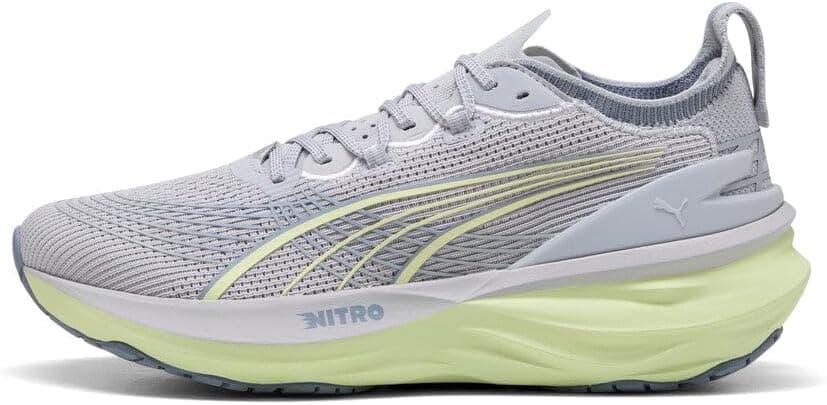
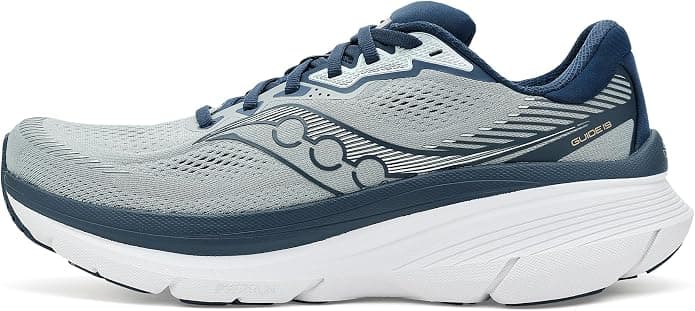
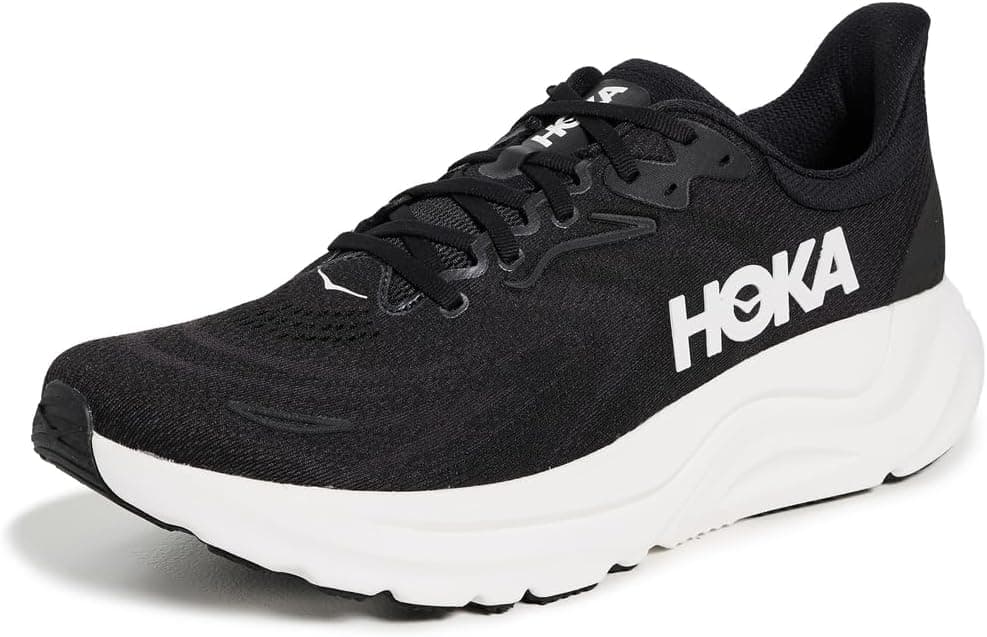
Not quite the right fit? Here are some shoes worth comparing.
Frequently Asked Questions
The three headline changes are a drop reduction from 12mm to 10mm, additional DNA Loft v3 foam (+3mm forefoot, +1mm heel), and a redesigned outsole with improved wet-road traction. The upper also received an update with a new flat-knit heel collar. The midsole compound and GuideRails system are unchanged, but RunRepeat's lab confirmed the foam has been re-tuned to feel approximately 27% softer. The price also increased by approximately $15.
Yes — it is specifically designed for mild to moderate overpronators. The GuideRails system uses raised sidewalls on both the medial and lateral edges of the midsole to allow natural foot motion while preventing excessive inward roll. Doctors of Running note the medial post and midsole sculpting provide consistent support that remains effective throughout long efforts. It is not recommended for supinators, as the support architecture is medially biased and may destabilise runners who under-pronate.
Yes, and multiple sources specifically recommend it as a walking shoe. Fleet Feet testers used it on walking pads throughout the workday, Doctors of Running describe it as excellent for standing and walking, and a significant portion of consumer reviews on REI and Zappos come from walkers rather than runners. The PDAC A5500 Diabetic shoe certification and APMA Seal of Acceptance further confirm its suitability for extended on-foot use beyond running.
For most runners, yes. Doctors of Running, Running Shoes Guru, and RunToTheFinish all report a true-to-size fit. Run Moore notes a subtle change from past versions: the GTS 25 may run slightly longer than earlier Adrenalines, so runners who previously sized up in this line may find their standard size works now. Three width options for men and two for women are available for those who need a different fit through the midfoot or toe box.
No. The GTS 25 is a traditional stability trainer with no plate of any kind. Its stability comes entirely from the GuideRails holistic support system, a medial post, and midsole geometry. This is consistent with the shoe's positioning as a comfort-and-protection daily trainer rather than a performance-focused super shoe.
Both are Brooks stability trainers, but they serve different runners. The Glycerin GTS is the brand's max-cushion stability option — softer, plusher, and better suited for runners who want a more indulgent long-run feel. The Adrenaline GTS 25 is firmer, more structured, and offers more prominent medial support, making it the better choice for runners with active overpronation management needs. Reviewers generally suggest the Glycerin GTS for high-mileage long runs and the Adrenaline GTS 25 for daily miles where a grounded, controlled feel is preferred.
It depends on the reason you were in the 12mm drop. If you relied on the higher drop to reduce Achilles or calf strain, the shift to 10mm places modestly more demand on those structures, and some longtime users have flagged this as a dealbreaker — several have reported stocking up on older versions. If the 12mm drop was simply habit rather than therapeutic, most reviewers find the 10mm version actually improves the ride through a smoother heel transition. Runners managing existing Achilles issues should try the shoe carefully before committing.
Key Sources
Brooks Running (official specs) — https://www.brooksrunning.com/en_us/mens/shoes/road-running-shoes/adrenaline-gts-25/110454.html
Doctors of Running — https://www.doctorsofrunning.com/2025/09/brooks-adrenaline-gts-25-review-2025.html
Believe in the Run — https://believeintherun.com/shoe-reviews/brooks-adrenaline-gts-25-review/
WearTesters — https://weartesters.com/brooks-adrenaline-gts-25-performance-review/
RunRepeat (lab review) — https://runrepeat.com/brooks-adrenaline-gts-25
Running Shoes Guru — https://www.runningshoesguru.com/reviews/road/brooks-adrenaline-gts-25-review/
Road Trail Run (multi-tester) — https://www.roadtrailrun.com/2025/08/brooks-adrenaline-gts-25-review.html
Fleet Feet — https://www.fleetfeet.com/blog/brooks-adrenaline-gts-25-review-the-anniversary-edition
RunToTheFinish — https://runtothefinish.com/brooks-adrenaline-gts-25-review/
Alastair Running — https://www.alastairrunning.com/brooks-adrenaline-gts-25-review/
Northern Runner — https://www.northernrunner.com/blog/brooks-adrenaline-gts-25-review/
Meta Endurance — https://meta-endurance.com/brooks-adrenaline-gts-25-review/
Flawless Shoe Reviews — https://flawlessshoereviews.com/brooks-shoes/brooks-adrenaline-gts-25-review/
Marathon Sports — https://www.marathonsports.com/blog/brooks-adrenaline-gts-25-review
Run Moore (specialty retail) — https://runmoore.com/brooks-adrenaline-gts-25-review-the-silver-anniversary-classic/
Alastair Running (YouTube) — https://www.youtube.com/watch?v=lFMjfOtQE5Q
REI customer reviews — https://www.rei.com/product/249691/brooks-adrenaline-gts-25-road-running-shoes-mens
Zappos customer reviews — https://www.zappos.com/product/review/10002909
Reddit / r/brooks — https://www.reddit.com/r/brooks/comments/1rcykp8/adrenaline_gts_25_too_soft/