
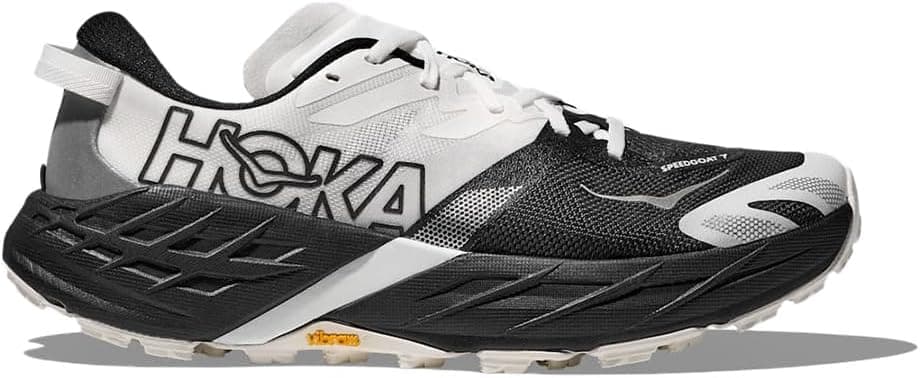

Hoka Speedgoat 7 Review
An aggregated overview based on reviewer and runner feedback.
Disclaimer: AI was used to help provide an unbiased perspective on this topic, and all content was carefully fact-checked and edited by human running-shoe analysts. It reflects aggregated opinions from reviewers and runners and does not represent firsthand testing. Learn more →
Overview & Quick Verdict
The Hoka Speedgoat 7 is the latest version of one of the most established max-cushion trail shoes on the market, and it arrives as a direct response to a mixed reception for the Speedgoat 6. The headline change is the midsole: Hoka has moved from its older compression-molded EVA to a supercritical EVA foam, a shift that reviewers across lab and editorial outlets treat as the defining upgrade of this generation.
The consensus is broadly positive and frames the 7 as a return to form. Reviewers consistently describe a livelier, more protective ride than the 6, paired with the Vibram Megagrip traction and secure lockdown that built the line's reputation. Several long-time followers of the series characterize it as the strongest Speedgoat since the 5.
Where opinions diverge is around fit and refinement rather than capability. The narrow, tapered toebox remains a recurring point of criticism, the $165 price is flagged as a step up in cost, and a few reviewers note that the tall, wide platform can feel bulky on precise technical terrain. The result is a shoe widely recommended as an all-around trail workhorse, with clear caveats for runners who need width or want a nimble, low-to-the-ground feel.
Key Stats
- Brand: Hoka
- Model: Speedgoat 7
- Category: Neutral max-cushion trail running shoe
- Terrain: Trail — smooth to moderately technical, mixed surfaces, ultras
- MSRP: $165
- Weight: ~9.6–9.7 oz / 272–275g (men's US 9); ~8.3 oz / 235g (women's)
- Stack Height: 38 mm heel / 33 mm forefoot advertised (lab calipers measured ~37.7 mm / 30.3 mm)
- Drop: 5 mm advertised (lab-measured closer to 7.4 mm; some brand listings state 4 mm)
Best For / Not Ideal For
Best For
- Trail runners wanting one versatile daily shoe for varied terrain and distances
- Ultra-distance runners and high-mileage trail training blocks
- Mixed terrain from smooth singletrack to moderately technical trails
- Runners prioritizing cushioning, protection, and grip over outright speed
- Midfoot and forefoot strikers who benefit from a rockered toe-off
- Runners with narrow to standard-width feet who want a locked-in fit
Not Ideal For
- Runners who need a naturally wide or high-volume toe box
- Those who prefer low-stack shoes with strong ground feel
- Runners looking for a lightweight, fast trail racer
- Deep-mud or full-winter specialists who need aggressive, widely spaced lugs
- Budget-focused buyers comparing against lower-priced trail trainers
Pros
- The new supercritical EVA midsole is widely described as more energetic and less dull than the CMEVA foam it replaces, adding responsiveness without giving up the line's signature protection.
- Vibram Megagrip with the updated lug pattern is treated as a class-leading traction package, with reviewers reporting reliable grip on wet rock, loose dirt, and mixed surfaces.
- The redesigned woven textile upper and reworked heel collar improve lockdown and comfort compared with previous versions, addressing a common Speedgoat 6 complaint.
- Reviewers consistently rate it a capable long-distance and ultra shoe, citing cushioning that holds up over sustained mileage.
- The wide platform and rocker geometry deliver a stable, planted ride that testers describe as confidence-inspiring for a high-stack trail shoe.
- Lab testing and multiple reviewers note strong upper and outsole durability, with a heavily reinforced toebox and minimal measured rubber wear.
Cons
- The tapered, pointy toebox is the most frequently cited drawback, with several reviewers reporting pinky-toe pressure and recommending the wide version for anything above narrow feet.
- The shoe is widely reported to run short, with a common recommendation to size up half a size.
- The $165 price is repeatedly flagged as a meaningful increase that narrows the shoe's value advantage over competitors.
- The tall, wide platform draws criticism for feeling bulky or disconnected on precise, off-camber, or highly technical terrain.
- The thin tongue is noted by some reviewers as a potential pressure point on long efforts.
- Durability reports are mixed, with at least one reviewer noting early midsole delamination on their pair.
Ride & Feel
The ride is defined by the switch to supercritical EVA, which reviewers describe as livelier and slightly softer than the previous generation while stopping well short of a plush, sink-in feel. Lab testing measured the foam in a middle-of-the-road softness range, and most testers characterize the character as controlled and protective rather than bouncy. The practical effect reported across sources is a shoe that feels more modern and less "dead" underfoot than the 6 without changing the Speedgoat's fundamentally stable identity.
The rocker geometry is a central part of how the shoe moves, with reviewers noting that the early forefoot roll smooths heel-to-toe transitions and helps over long, fatiguing efforts. This suits midfoot and forefoot strikers in particular, who can use the toe-off momentum most directly. On flatter, groomed terrain and sustained climbs, this rolling profile is generally described as an asset.
Ground feel is limited by the tall stack, and this is where impressions split. Some reviewers appreciate a degree of intentional forefoot feedback, while others find the platform tall enough to feel removed from the trail on technical sections. Reviewers comparing it to lower-slung shoes consistently frame the Speedgoat as the more cushioned, less communicative option.
Fit & Comfort
Sizing is the most consistent fit theme, with multiple sources reporting that the shoe runs short and advising a half-size increase for many runners. Length aside, the midfoot and heel are generally praised for a secure, well-managed hold, helped by the woven upper and the reworked lacing and tongue setup.
The toebox is the recurring sticking point. Lab measurements confirm a narrower-than-average forefoot, and several reviewers report friction along the pinky toe, steering wide-footed runners toward the available 2E option. A minority counterpoint exists in some retailer customer feedback describing the toebox as more forgiving than earlier versions, which suggests fit perception varies with foot volume and shape.
Comfort elsewhere is reported as improved over the Speedgoat 6, particularly at the heel collar, which reviewers describe as softer and better shaped. The tongue is the exception for some testers, who find it thin enough to create pressure on longer outings and would trade a little weight for more padding.
Support & Stability
For a shoe with this much stack height, the Speedgoat 7 is generally regarded as stable, and reviewers attribute this to geometry rather than corrective features. A wide forefoot and heel base, raised midsole sidewalls, and high torsional rigidity are cited in lab testing as the main contributors to a planted, centered ride. The shoe is neutral, with no plate or medial post, relying instead on its footprint and structure.
That stability is described as most effective on climbs, groomed trail, and sustained vertical, where the wide base keeps the platform steady. On steep off-camber terrain and aggressive side-hilling, some reviewers note that the higher center of gravity and softer foam require more deliberate foot placement than a lower shoe would. A small number of community reports mention occasional ankle roll on technical ground, which appears to depend heavily on terrain and individual mechanics rather than being a consensus finding.
The reworked heel counter is reported as less rigid than the previous version, a change lab testing frames as a comfort gain with a minor reduction in rearfoot rigidity. For neutral runners on moderate terrain, the overall stability picture is described positively across sources.
Traction & Durability
Traction is one of the least contested strengths in the review ecosystem. The Vibram Megagrip outsole and its updated multidirectional lug pattern are praised for grip on wet rock, dry rock, loose gravel, and mixed surfaces, with the added lateral forefoot lugs highlighted for climbing and quick direction changes. The main reported limits are deep mud and heavy snow, where the lug depth and spacing are considered adequate rather than specialized.
Durability is more divided. On the positive side, lab abrasion testing recorded very low outsole wear and a strongly reinforced toebox, and several reviewers report that the redesigned upper, with welded overlays and reduced exposed stitching, looks near-new after early mileage. This is framed across sources as a meaningful improvement over previous Speedgoat uppers.
The counterweight comes from specific concerns rather than general wear. At least one reviewer reported early midsole delamination on their sample, lab testing scored the heel lining lower for durability, and the outsole's exposed midsole sections remain a recurring community worry about long-term foam protection. Because the shoe is early in its release cycle, high-mileage durability data beyond a few hundred miles is still limited.
Energy Return & Performance
Lab testing places the supercritical EVA midsole in a respectable but not category-leading range for energy return, with measured figures in the mid-50s to low-60s percent depending on the zone of the shoe. Reviewers frame this as a clear step up from the outgoing foam that better matches the shoe's price, while noting it does not reach the returns of premium PEBA-based trail shoes. Shock absorption measurements, by contrast, are reported as above average, reinforcing the shoe's protective character.
On performance, the shoe is consistently positioned as a versatile trainer rather than a racer. Reviewers report it handling easy trail miles, long runs, and ultra-distance efforts well, and several note it holds up on short road connectors better than expected for a lugged trail shoe. Opinions on that road versatility differ, with some sources comfortable using it on pavement and more technically focused reviewers treating it strictly as a trail-first option.
The absence of a plate is not treated as a performance limitation in the training context, since the rocker geometry and platform structure do the work of smoothing transitions. Where reviewers draw the line is outright speed, with the consensus being that faster or more technical racing is better served by lighter, lower shoes.
Conclusion
The Hoka Speedgoat 7 is widely received as a course correction that restores the line's reputation as a dependable, do-it-all trail shoe. The supercritical EVA midsole is the change that anchors that view, delivering a more energetic and modern ride while preserving the cushioning, stability, and traction that defined the series. For runners who want one shoe for varied terrain and long distances, reviewers place it firmly among the easiest recommendations in the category.
The reservations are consistent and predictable rather than severe. The narrow toebox, short sizing, higher price, and a platform that trades agility for stability are the trade-offs runners are asked to accept, and durability warrants watching as long-term data accumulates. None of these undercut the core proposition for its intended audience.
The clearest way to read the 7 is as a refinement of a proven formula rather than a reinvention. Runners with narrow-to-standard feet who prioritize protection, grip, and versatility over speed and ground feel are the natural fit, and for them the shoe delivers what the Speedgoat name has long promised.
Alternatives to Consider
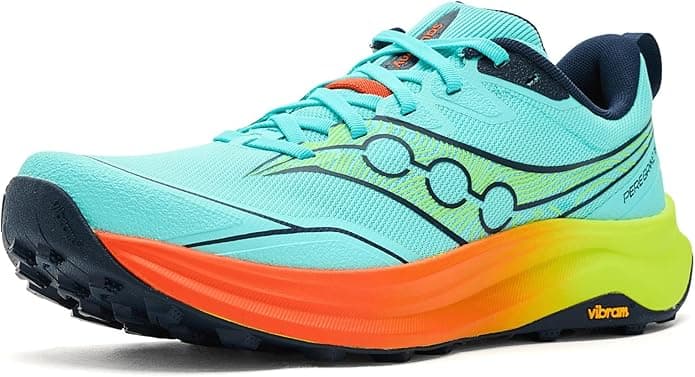
Not quite the right fit? Here are some shoes worth comparing.

Frequently Asked Questions
Most reviewers report that it runs slightly short and recommend sizing up half a size, particularly for runners with longer toes or those between sizes. The midfoot and heel are generally described as secure, so the main sizing concern is length rather than overall hold. A wide (2E) version is available for runners who need more room in the toe box.
No. The Speedgoat 7 is non-plated and relies on its tall supercritical EVA midsole and a thick outsole for underfoot protection. Reviewers report that the stack height is high enough that sharp trail features rarely reach the foot despite the absence of a plate.
The most significant change is the midsole, which moves from compression-molded EVA to a supercritical EVA foam that reviewers describe as livelier and more responsive. The 7 also features a redesigned upper with better lockdown, a reworked and softer heel collar, an updated lug pattern, and a new gaiter attachment. Many reviewers consider it a return to form after a mixed response to the 6.
The standard width has a narrow, tapered toe box that is the shoe's most commonly cited drawback, and several reviewers report pinky-toe friction. Wide-footed runners are generally advised to choose the 2E wide version rather than the standard D width. Some retailer customer feedback describes the fit as more forgiving than past versions, so foot volume and shape affect individual experience.
The drop is most commonly advertised as 5 mm, though some brand listings state 4 mm. Independent lab measurement found the actual heel-to-toe drop closer to 7.4 mm, higher than the marketed figure. In practice this makes the ride slightly more accommodating for heel strikers than the stated spec suggests.
Durability reports are mixed. Lab testing recorded very low outsole wear and a strongly reinforced toebox, and several reviewers found the redesigned upper looks near-new after early mileage. However, at least one reviewer reported early midsole delamination, lab testing rated the heel lining lower for durability, and the exposed midsole sections remain a community concern, so long-term wear is worth monitoring.
Key Sources
RunRepeat — https://runrepeat.com/hoka-speedgoat-7
Believe in the Run — https://believeintherun.com/shoe-reviews/hoka-speedgoat-7-review/
Road Trail Run (Multi-Tester) — https://www.roadtrailrun.com/2026/02/hoka-speedgoat-7-multi-tester-review-5.html
iRunFar — https://www.irunfar.com/hoka-speedgoat-7-review
OutdoorGearLab — https://www.outdoorgearlab.com/reviews/shoes-and-boots/trail-running-shoes-men/hoka-speedgoat-7
CleverHiker (Men's) — https://www.cleverhiker.com/footwear/mens-hoka-speedgoat-7-review/
CleverHiker (Women's) — https://www.cleverhiker.com/footwear/womens-hoka-speedgoat-7-review/
Treeline Review — https://www.treelinereview.com/gearreviews/hoka-speedgoat-7-trail-running-shoes-review
Better Trail — https://bettertrail.com/outdoor-gear/hoka-speedgoat-7-trail-running-shoe-review
The Running Channel — https://therunningchannel.com/hoka-speedgoat-7-review/
Tom's Guide — https://www.tomsguide.com/wellness/running/hoka-speedgoat-7-review
Running Warehouse — https://www.runningwarehouse.com/HOKA_Speedgoat_7/descpage-HSG7M02.html
Runner's World — https://www.runnersworld.com/gear/a71163694/hoka-speedgoat-7-review/
Fleet Feet — https://www.fleetfeet.com/products/mens-hoka-speedgoat-7
Reddit / r/RunningShoeGeeks — https://www.reddit.com/r/RunningShoeGeeks/comments/1qkjemz/hoka_speedgoat_7/