
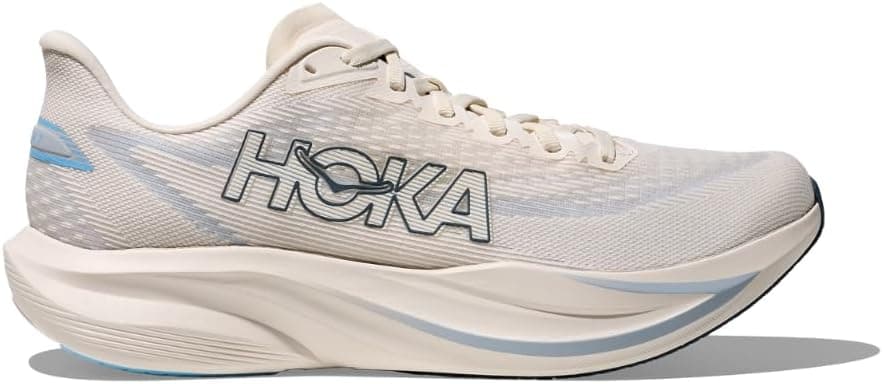


Hoka Mach 7 Review
An aggregated overview based on reviewer and runner feedback.
Disclaimer: AI was used to help provide an unbiased perspective on this topic, and all content was carefully fact-checked and edited by human running-shoe analysts. It reflects aggregated opinions from reviewers and runners and does not represent firsthand testing. Learn more →
Overview & Quick Verdict
The Hoka Mach 7 is the seventh iteration of Hoka's lightweight, plateless daily trainer, arriving in March 2026 with a refined creel jacquard upper, an improved dual-compound outsole, and the same supercritical EVA midsole that defined its predecessor. On paper, it is a modest update. On the run, the consensus across professional testers, retail reviewers, and enthusiast communities is that it is one of the most well-rounded lightweight trainers available at its price point.
The case for the Mach 7 rests on a combination of factors that very few $145 shoes can match simultaneously: genuine lightness, a versatile pace range, adequate cushioning for daily mileage, and now a meaningfully improved outsole. What it is not is a leap forward. Reviewers are almost unanimous that if you already own a Mach 6 and can still find it discounted, there is little reason to upgrade immediately.
Where the Mach 7 draws consistent criticism is in its narrow fit — a long-standing characteristic of the Mach line — and in its retention of supercritical EVA at a moment when much of the market has moved to bouncier PEBA and ATPU foams. For runners who prioritize foam technology or need a generous forefoot, the Mach 7 asks for real compromise. For everyone else, it remains a remarkably capable and accessible daily workhorse.
Key Stats
- Brand: Hoka
- Model: Mach 7
- Category: Neutral lightweight daily trainer
- Terrain: Road
- MSRP: $145
- Weight: 8.37 oz / 237g (men's, per Hoka size 10); Running Warehouse measured 8.5 oz / 241g on a US9; RunRepeat's lab pair measured 7.9 oz / 224g — figures vary by size and measurement method
- Stack Height: 37 mm heel / 32 mm forefoot (brand spec); RunRepeat lab-measured 35.6 mm / 26.2 mm
- Drop: 5 mm (brand spec); RunRepeat lab-measured 9.4 mm, noting that Hoka's measurement methodology does not follow World Athletics guidelines
Best For / Not Ideal For
Best For
- Neutral runners who want a single shoe capable of handling easy miles, steady runs, and uptempo workouts
- Runners building a two- or three-shoe rotation who need a lightweight performance trainer between a plated racer and a max-cushion cruiser
- Narrow-to-medium footed runners who want secure lockdown without extra bulk
- Budget-conscious runners who want competitive performance at $145
- Runners upgrading from a heavier daily trainer, for whom the Mach 7's lightness and rocker will feel like a meaningful step forward
- Wet-weather runners, particularly given the upgraded forefoot traction
Not Ideal For
- Runners with wide feet who cannot access the wide-width version
- Runners who want a plush, max-cushioned ride for easy long days
- Runners who want PEBA or ATPU-level foam responsiveness and bounce
- Existing Mach 6 owners — the update is too incremental to justify full-price repurchase unless the 6 is unavailable
Pros
- Exceptional versatility across paces. Reviewers across multiple independent sources confirm the Mach 7 handles easy recovery runs, steady aerobic miles, tempo sessions, and interval work without feeling mismatched at any of them — a rare quality in a single shoe.
- Genuinely lightweight on the foot. Despite a slightly higher official weight than the Mach 6, the shoe consistently feels nimble during runs, with the combination of light upper construction and rocker geometry contributing to an efficient, low-effort stride.
- Meaningfully improved outsole traction. The new dual-compound setup — sticky rubber in the forefoot, Durabrasion rubber at the heel — is one of the most widely praised updates, with multiple reviewers specifically noting improved confidence on wet roads and in icy conditions.
- Gusseted tongue stays centered. A reliable complaint about the Mach 6 was tongue migration during runs; the Mach 7's gusseted tongue was praised across Fleet Feet, Road Trail Run, and Believe in the Run for staying securely in place.
- Smooth MetaRocker transitions. The early-stage rocker promotes a natural, rolling gait that multiple reviewers describe as efficient without feeling artificially propulsive — it works at all paces rather than only rewarding faster running.
- Competitive price for the category. At $145, it undercuts the Adidas Adizero Evo SL ($150), the Hoka Clifton 10 ($155), and the Bondi 9 ($175), making it one of the better value propositions in the lightweight trainer segment.
Cons
- Narrow fit, especially through the toe box. This is the single most consistent criticism across all sources. The standard fit runs snug and low-volume; runners with wide feet or high-volume forefoots are consistently advised to size up half a size or opt for the wide version.
- Supercritical EVA lags behind the market in foam technology. While the foam is described as firm-yet-peppy and performs well in practice, it measurably trails PEBA and ATPU compounds in energy return and all-out bounce — a gap that has become harder to overlook as those materials become more common at the same price point.
- Too similar to the Mach 6 to justify a full-price upgrade. Near- universal consensus from professional reviewers: if a discounted Mach 6 is available, it remains the better buy. The changes to the Mach 7 are real but incremental.
- Midsole firmness may disappoint plush-ride seekers. RunRepeat's durometer recorded 41.7 AC — a moderately firm result — and multiple sources flag that runners expecting Clifton-level softness will find the Mach 7 insufficiently cushioned for easy days.
Ride & Feel
The Mach 7's ride is built on three overlapping characteristics: a moderately firm but responsive supercritical EVA midsole, a smooth MetaRocker geometry, and an overall weight that keeps the shoe feeling quick underfoot. The result is a ride that reviewers consistently describe as controlled and efficient rather than pillowy or explosive. It does not attempt to replicate the trampoline sensation of PEBA-based foams, and runners expecting that kind of bounce will be disappointed.
What the midsole does well is balance. It is cushioned enough to absorb road impact on easy runs without feeling dead, and firm enough to respond crisply on tempo efforts without feeling harsh. RunRepeat measured 60.6% energy return in the heel and 66.6% in the forefoot — a solid but not class-leading result that accurately reflects the on-run experience.
The rocker geometry is notable for being non-intrusive. Several reviewers specifically pointed out that the forward roll feels natural during running while remaining comfortable even at walking pace — a small but meaningful distinction from shoes with more aggressive geometry that feel awkward off the run.
Fit & Comfort
Sizing across the majority of professional review sources is reported as true to size in length, but the fit profile is emphatically narrow. The standard width (D for men, B for women) runs snug through the midfoot and toe box, and this is the most repeated caution across the entire review ecosystem — from Fleet Feet's team testers to Road Trail Run's multi-tester panel to reader comments on Believe in the Run. A wide version is available for both men and women, and runners at or near the boundaries of standard width are well advised to try it before buying.
Step-in comfort is functional rather than luxurious. The creel jacquard upper is thin and breathable but lacks the plush padding found in the Clifton or Bondi lines, which aligns with the Mach 7's identity as a performance trainer rather than an all-day comfort shoe. Heel entry and lockdown are secure thanks to the updated collar design and gusseted tongue, and no reviewers flagged slippage or hotspots after extended use. The overall comfort story is positive within its design intent — just not what runners should expect if they are used to Hoka's cushioned lifestyle or daily-comfort models.
Support & Stability
The Mach 7 is a neutral shoe. It does not include Hoka's J-Frame or any other dedicated stability structure; its inherent stability comes from a wide midsole base, a moderately firm EVA compound, and a platform geometry that keeps the foot centered through the stride. For neutral runners and those with mild overpronation, this setup is sufficient and well regarded. Runners with significant stability needs should look elsewhere in Hoka's lineup, specifically the Arahi or Gaviota series.
RunRepeat's lateral stiffness testing recorded 13.6N — a near-average result that reflects the brand's intention to keep the shoe feeling accessible and all-around rather than specializing in either direction. The stiff heel counter, flagged as a potential discomfort factor, does contribute a degree of rear-foot guidance that some heel-strikers may find beneficial. On balance, the Mach 7 is appropriately stable for its category without overcorrecting into guidance-focused territory.
Traction & Durability
The outsole is the most significant functional upgrade over the Mach 6, and reviewers consistently recognize it as such. The dual-compound design — sticky rubber across the forefoot for toe-off grip, and Hoka's Durabrasion rubber at the heel for wear resistance — addresses both traction and longevity in a single update. Multiple reviewers in the UK and Northeast US specifically noted improved confidence on wet asphalt and icy sidewalks, conditions where the Mach 6 was already acceptable but the Mach 7 is clearly better.
Long-term durability data beyond 100–150 miles is limited at the time of writing, as most reviews were conducted within that range. Historical context from the Mach 6 suggests the platform is capable of 300–400 miles of training use, and the improved rubber coverage on the Mach 7 gives reason to expect similar or better longevity. Earlier Mach iterations had meaningful outsole wear concerns that were resolved by the Mach 6; that progress appears to carry forward here.
Energy Return & Performance
RunRepeat's lab data puts the Mach 7 at 60.6% energy return in the heel and 66.6% in the forefoot — competitive for an EVA-based shoe, but measurably below what the best PEBA and ATPU alternatives deliver at similar price points. On the run, this translates to a shoe that feels lively and capable across a wide pace range without ever feeling genuinely explosive. It is a useful distinction: the Mach 7 performs well, but it does not reward effort increases with the kind of amplification that PEBA-based competitors can provide.
Where the Mach 7 excels is consistency. Multiple testers ran hard workouts, progression runs, long runs, and easy recovery miles in the same pair and found it handled each without significant compromise. Road Trail Run's Michael ran a hard treadmill workout well below marathon pace in the shoe and found it handled the effort comfortably; the same shoe then covered easy aerobic mileage the following day without feeling punishing. For runners who want one shoe across training types rather than a purpose-built tool for specific sessions, that consistency is the Mach 7's core performance argument.
Final Verdict
The Hoka Mach 7 is a well-executed, genuinely capable lightweight daily trainer that succeeds most clearly at versatility, traction, and value. It handles the full range of daily training paces without meaningful compromise, costs less than most of its direct competitors, and arrives with a measurably improved outsole over an already-solid predecessor.
The legitimate reservations are real, not nitpicks. Retaining supercritical EVA at a moment when PEBA and ATPU are increasingly available at $150 or less is a choice that will matter to foam-focused buyers. The narrow fit will exclude a meaningful portion of the running population from the standard version. And the incremental gap between this shoe and the Mach 6 means anyone holding a discounted pair of the previous version has little immediate reason to replace it.
For runners entering the Mach line for the first time, for those whose Mach 6 has worn out, or for those building a rotation around a capable all-rounder at a fair price, the Mach 7 earns a clear recommendation — with the caveat to try the wide version if you have any doubt about fit.
Alternatives to Consider
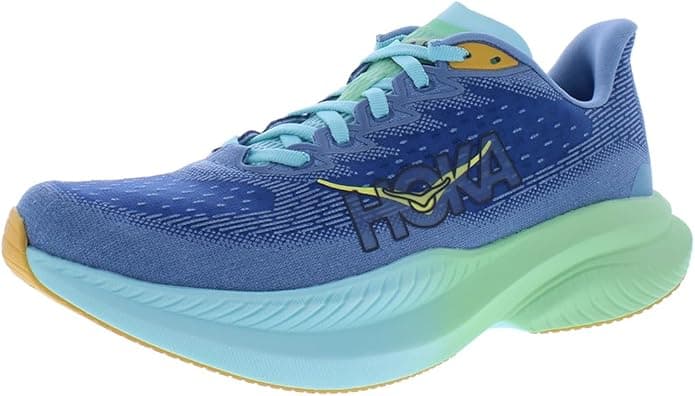
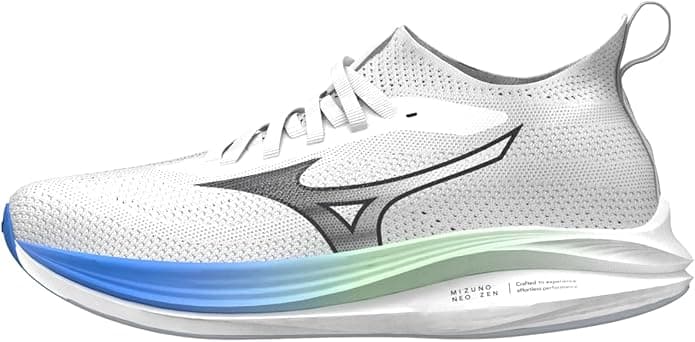
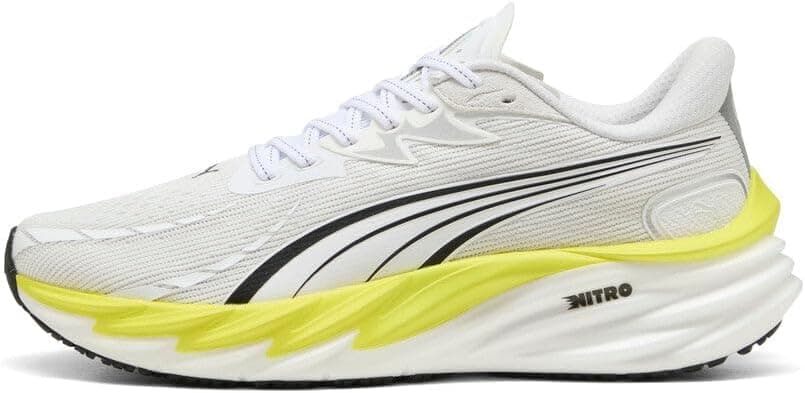
Not quite the right fit? Here are some shoes worth comparing.
Frequently Asked Questions
For most neutral runners, yes — with caveats. The Mach 7's versatility across easy, steady, and uptempo paces makes it a capable daily trainer throughout a marathon training block. However, runners who experience significant foot swelling on long runs may find the narrow fit increasingly uncomfortable beyond 13–15 miles. For marathon-specific long runs, pairing it with a more accommodating shoe is worth considering.
No. The Mach 7 is unplated. It relies entirely on its supercritical EVA midsole and MetaRocker geometry for cushioning, energy return, and transition efficiency. Runners wanting a plate-assisted ride should consider the Hoka Mach X3 or a dedicated racing shoe instead.
The two shoes are functionally very similar. The Mach 7 adds a meaningfully improved dual-compound outsole with better wet traction, a slightly updated creel jacquard upper with improved breathability and a more secure gusseted tongue, and minor midsole geometry refinements. The midsole compound, stack height, drop, and overall ride character are essentially unchanged. Reviewers broadly agree: if you can find a discounted Mach 6, it remains the better value purchase.
For length, most reviewers report the Mach 7 is true to size. For width, runners with medium-to-wide feet or high-volume forefoots should strongly consider the wide version (D for women, 2E for men) or sizing up half a size. The standard fit is consistently described as narrow through the midfoot and toe box, and this is the most repeated caution across professional and community reviews alike.
Hoka lists the drop as 5mm, but RunRepeat's lab measurement came in at 9.4mm. Hoka's measurement methodology is non-standard — the brand measures closer to the midfoot rather than using the heel-to-forefoot differential used by World Athletics guidelines. On the run, multiple reviewers describe the shoe feeling closer to a 5mm drop shoe.
Early durability signals are positive. The updated dual-compound outsole — with Durabrasion rubber at the heel and sticky rubber at the forefoot — addresses the wear concerns that affected earlier Mach iterations. Based on the Mach 6 platform, reviewers estimate 300–400 miles of training use is realistic. Long-term data beyond 150 miles is limited at the time of writing, as most professional reviews were conducted within that range.
Key Sources
Hoka US Product Page — https://www.hoka.com/en/us/mens-road/mach-7/1171904.html
RunRepeat — https://runrepeat.com/hoka-mach-7
The Run Testers — https://theruntesters.com/hoka-mach-7-review/
Believe in the Run — https://believeintherun.com/shoe-reviews/hoka-mach-7-review/
Road Trail Run (Multi-Tester) — https://www.roadtrailrun.com/2026/03/hoka-mach-7-multi-tester-review-no.html
Road Trail Run (Solo Review) — https://www.roadtrailrun.com/2026/03/michaels-hoka-mach-7-review-at-35-miles.html
Fleet Feet — https://www.fleetfeet.com/blog/hoka-mach-7-review-mach-be-nimble-mach-be-quick
Running Warehouse — https://www.runningwarehouse.com/reviews/HOKA-shoe-reviews/hoka-mach-7.html
Tom's Guide — https://www.tomsguide.com/wellness/running/i-ran-75-miles-in-the-hoka-mach-7-heres-my-verdict-on-the-versatile-daily-trainer
Treeline Review — https://www.treelinereview.com/gearreviews/hoka-mach-7-road-running-shoes-review
RunToTheFinish — https://runtothefinish.com/hoka-mach-7-review/
Marathon Sports — https://www.marathonsports.com/blog/hoka-mach-7-review-a-tried-and-true-favorite-for-every-run
Northern Runner — https://www.northernrunner.com/blog/hoka-mach-7-review/
Alastair Running — https://www.alastairrunning.com/hoka-mach-7-review/
Running Lab Store — https://runninglabstore.com/blogs/news/hoka-mach-7-your-gateway-to-everyday-speed
Gear Patrol — https://www.gearpatrol.com/outdoors/hoka-mach-7/
Reddit r/RunningShoeGeeks — https://www.reddit.com/r/RunningShoeGeeks/comments/1ov51sj/hoka_mach_7/
Reddit r/AskRunningShoeGeeks — https://www.reddit.com/r/AskRunningShoeGeeks/comments/1ru5bn7/do_hoka_mach_67_actually_feel_like_low_drop_shoes/