
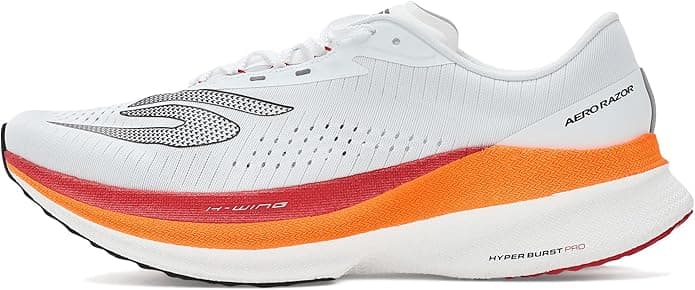


Skechers Aero Razor Review
An aggregated overview based on reviewer and runner feedback.
Disclaimer: AI was used to help provide an unbiased perspective on this topic, and all content was carefully fact-checked and edited by human running-shoe analysts. It reflects aggregated opinions from reviewers and runners and does not represent firsthand testing. Learn more →
Overview & Quick Verdict
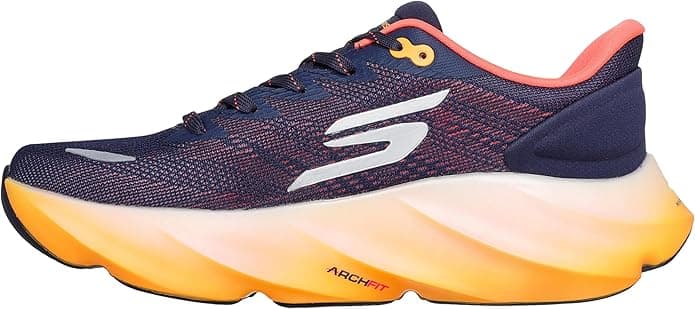
The Skechers Aero Razor is the point where Skechers' performance line stops being a curiosity and starts being a genuine competitor. Launched in February 2026 at $140, it pairs a full-length supercritical A-TPU midsole (Hyper Burst Pro) with a nylon forefoot plate and a racing-flat weight, landing in the lightweight tempo-and-speed category rather than the max-cushion daily-trainer space most brands are chasing.
Across lab outlets, multi-tester panels, and community reviewers, the consensus is unusually consistent: this is a fast, light, responsive shoe that undercuts most of its rivals on price. Reviewers repeatedly frame it as delivering super-trainer-adjacent performance for the cost of a mid-range trainer, with the sub-7-ounce weight and energetic foam drawing the most praise.
The caveats are equally consistent. The ride is firm rather than plush, the fit is narrow and performance-oriented, and an aggressive forefoot rocker makes slow and easy running feel awkward for some testers. It is best understood as a workout and racing tool rather than a do-everything daily trainer, and buyers weighing it against softer options should factor that in before purchase.
Key Stats
- Brand: Skechers
- Model: Aero Razor
- Category: Neutral lightweight performance trainer (tempo / speed)
- Terrain: Road
- MSRP: $140
- Weight: 6.9 oz / 196 g (men's US 9); 5.6 oz / 159 g (women's)
- Stack Height: 36 mm heel / 32 mm forefoot (manufacturer spec)
- Drop: 4 mm (manufacturer spec)
Note: Independent lab testing at RunRepeat measured the stack closer to 37 mm heel / 27 mm forefoot, producing a measured drop of roughly 9.8 mm rather than the listed 4 mm. Because of the pronounced rocker, the effective drop most runners perceive is estimated between 5 mm and 8 mm depending on footstrike.
Best For / Not Ideal For
Best For
- Runners who want a lightweight, lower-stack shoe for tempo runs, threshold work, intervals, and track sessions
- 5K to half-marathon racing on a budget
- Runners who prefer a firm, connected, responsive ride over a soft or towering max-cushion platform
- Value-focused buyers wanting supercritical foam and a plate without paying super-trainer prices
- Neutral runners with narrow to standard-width feet
Not Ideal For
- Runners who want a plush, soft ride for easy or recovery days
- Wide-footed runners, as the shoe runs narrow and offers no wide sizing
- Heavier runners who need more cushioning and protection
- Anyone looking for a single, highly cushioned everyday trainer
Pros
- Exceptionally light for its stack height, with most sources reporting a men's US 9 weight of 6.9 oz / 196 g, giving it a quick, nimble feel during faster efforts.
- Strong price-to-performance value at $140, a point nearly every outlet raises when comparing it to more expensive tempo trainers and super trainers.
- Energetic Hyper Burst Pro foam that reviewers describe as responsive and lively at pace, with rebound that returns energy without collapsing into softness.
- Full-coverage Goodyear outsole that testers credit for confident grip in wet and slick conditions, unusual for a shoe this light.
- A smooth Hyper Arc rocker that helps transitions roll forward efficiently, particularly as the pace increases.
- Secure lockdown from the engineered mesh upper and gusseted tongue, with reviewers noting a locked-in fit and little to no lace slippage.
Cons
- The ride leans firm and direct, which several reviewers find unforgiving at recovery and easy training paces.
- A narrow, performance-oriented fit through the midfoot and forefoot, with retail and expert reviews flagging it as restrictive for wide feet.
- An aggressive toe spring that multiple testers describe as noticeable over longer miles and awkward at slow or walking paces.
- Limited cushioning depth for high-mileage easy days, meaning many runners will still want a softer trainer alongside it.
- No wide-width option currently offered, leaving runners who need extra volume without a version to size into.
Ride & Feel
Reviewers characterize the Aero Razor's ride as firm and responsive rather than soft, comparing the Hyper Burst Pro A-TPU to other pellet-based foams that prioritize immediate rebound over deep compression. The sensation is one of quick, snappy turnover that rewards faster efforts, with the foam feeling more alive as the pace lifts.
The Hyper Arc rocker is central to that experience, rolling the foot forward through the gait cycle and giving transitions a smooth, forward-driving character. Opinions split on how prominent it feels: some reviewers describe the geometry as aggressive and prescriptive, while others report the roll feels natural and unobtrusive when simply standing or cruising.
Ground feel sits on the connected end of the spectrum for a modern trainer, which suits runners who dislike the removed sensation of tall max-stack shoes. That same directness is why several sources caution that easy and recovery running feels less comfortable here than in a softer, more cushioned option.
Fit & Comfort
Sizing is generally reported as true to size, with most testers taking their normal running shoe size. The fit is snug and race-oriented, and the toe box in particular draws repeated comments for running narrow, making it a poor match for wide feet or high-volume forefeet.
There is some nuance in the width feedback. A few reviewers note the Aero Razor fits closer to a standard width than earlier, notoriously narrow Skechers models, and at least one longer-term tester found the width acceptable over high mileage. The consensus still skews narrow, so runners between sizes or with wider feet are advised to try before buying.
The upper itself earns positive marks for breathability and lockdown, with a gusseted tongue and a well-shaped heel counter that holds the foot securely. Reviewers also single out an improved heel hold relative to last year's Aero models, where slippage had been a recurring complaint.
Support & Stability
The Aero Razor is a neutral shoe, but reviewers note it carries mild inherent guidance rather than being purely unstructured. The nylon H-Wing plate in the forefoot, combined with modest midsole sidewalls, is credited with keeping the foot tracking through toe-off and adding a measure of forefoot stability.
Because the platform is relatively narrow and performance-oriented, it is not positioned as a support shoe and offers no dedicated stability features. Runners who need medial posting or a wide, planted base for overpronation are steered elsewhere by most sources.
For neutral runners with efficient mechanics, the stability picture is broadly positive, with the plate and rocker geometry providing enough structure to feel secure at speed without dictating the stride.
Traction & Durability
The Goodyear rubber outsole is one of the shoe's most consistently praised elements after the midsole. Reviewers report confident grip across wet roads, damp surfaces, and even light trail or icy conditions, which is notable given how little the outsole adds to the overall weight.
Coverage is generous for a lightweight shoe, and early durability signals are encouraging. A 50-plus-mile multi-tester assessment described wear tracking at an average rate, while a separate 100-mile review reported the midsole and outsole holding up well with only minor cosmetic upper bunching.
Longevity beyond that mileage is still being established, but the combination of full outsole coverage and the durability reputation of Skechers' Goodyear rubber leaves reviewers optimistic about the shoe's lifespan relative to other lightweight trainers.
Energy Return & Performance
Lab testing at RunRepeat measured rebound at 67.6% in the heel and 71.1% in the forefoot, figures the outlet described as strong for a shoe in this class and price. A durometer reading of 45.5 on the Asker C scale confirmed the firm-but-responsive character reviewers report on the run, aligning the lab data with field impressions.
On the run, the performance translates to a shoe that excels at tempo runs, threshold efforts, longer intervals, and uptempo training, with several reviewers also using it successfully for shorter road races. The nylon forefoot plate is described as a subtle contributor rather than an aggressive lever, adding a bit of pop through toe-off without the rigidity of a full-length carbon racer.
Where the shoe is less convincing is at the extremes: reviewers note the pronounced forefoot rocker can interfere with all-out sprinting, and the firm, stripped-down build makes it a less natural choice for very easy mileage. As a dedicated workout and speed tool, though, it is widely regarded as punching well above its price.
Conclusion
The Skechers Aero Razor is the clearest evidence yet that Skechers can compete with the established names in performance running. Its light weight, responsive supercritical foam, capable Goodyear outsole, and aggressive-for-the-money pricing combine into a workout and racing shoe that reviewers across lab, panel, and community sources rate highly.
The trade-offs are real and predictable: a firm ride, a narrow fit with no wide option, and a forefoot geometry that makes easy running less comfortable. None of these are surprising given the shoe's intent, and none undercut its core value proposition, but they do define who it suits.
For runners seeking a fast, connected, plate-assisted trainer for speed days without spending super-trainer money, the Aero Razor is one of the strongest options in its category. Buyers wanting plush cushioning for daily mileage or extra room in the toe box will be better served elsewhere.
Alternatives to Consider
Not quite the right fit? Here are some shoes worth comparing.
Frequently Asked Questions
No. The Aero Razor uses a nylon forefoot H-Wing plate, not a full-length carbon plate. Some early reviews and marketing summaries described it as carbon, but retailer specifications and expert reviews identify it as nylon, and Skechers positions several other models in its lineup as the carbon-plated options. The nylon plate gives a snappy but more flexible, forgiving toe-off than a rigid carbon racer.
Yes, most reviewers take their normal running shoe size. The fit is snug and race-oriented, and the toe box runs narrow. Runners with wide feet or high-volume forefeet may find it restrictive and should try it on before buying, as there is currently no wide-width option.
It can, but it is not the ideal choice for most runners. Its firm ride and lower cushioning make it best suited to tempo runs, intervals, track workouts, and faster efforts. Efficient runners may use it daily, but many will prefer a softer, more cushioned shoe for easy and recovery miles.
For faster long runs and shorter races it is well regarded, with reviewers using it comfortably through half-marathon efforts. Opinions are more mixed on longer distances: some testers find the firm ride and minimal upper less forgiving over time, while others report enough underfoot protection to handle long training runs. Runners sensitive to firmness may prefer a more cushioned option for marathon-distance work.
It uses Hyper Burst Pro, a supercritical A-TPU (pellet-based) foam. Reviewers describe it as firm and responsive, prioritizing quick energy return over soft compression. Independent lab testing recorded rebound figures of roughly 68% in the heel and 71% in the forefoot, which are strong for a shoe at this price.
Early durability signals are positive. The full-coverage Goodyear rubber outsole is praised for grip and wear resistance, and multi-tester reviews at 50 and 100 miles reported average-to-good wear with only minor cosmetic changes to the upper. Long-term durability beyond that mileage is still being established.
Key Sources
RunRepeat — https://runrepeat.com/skechers-aero-razor
Doctors of Running — https://www.doctorsofrunning.com/2026/02/skechers-aero-razor-review-2026.html
Believe in the Run — https://believeintherun.com/shoe-reviews/skechers-aero-razor-review/
Road Trail Run (Multi-Tester) — https://www.roadtrailrun.com/2026/02/skechers-aero-razor-multi-tester-review.html
Road Trail Run (100-Mile Review) — https://www.roadtrailrun.com/2026/04/skechers-aero-razor-100-mile-review.html
Outside Online — https://run.outsideonline.com/gear/road-shoes/skechers-aero-razor-review/
Tom's Guide — https://www.tomsguide.com/wellness/running/skechers-aero-razor-review
Slowtwitch — https://www.slowtwitch.com/running/shoe-review-skechers-delivers-with-the-aero-razor/
WeeViews (Multi-Tester) — https://www.weeviews.com/reviews/4299/aero-razor
RunToTheFinish — https://runtothefinish.com/skechers-aero-razor-review/
Running Warehouse (Specs & User Reviews) — https://www.runningwarehouse.com/Skechers_Aero_Razor/descpage-SKXARM3.html
Skechers (Press Release / Manufacturer Spec) — https://www.businesswire.com/news/home/20260213901468/en