
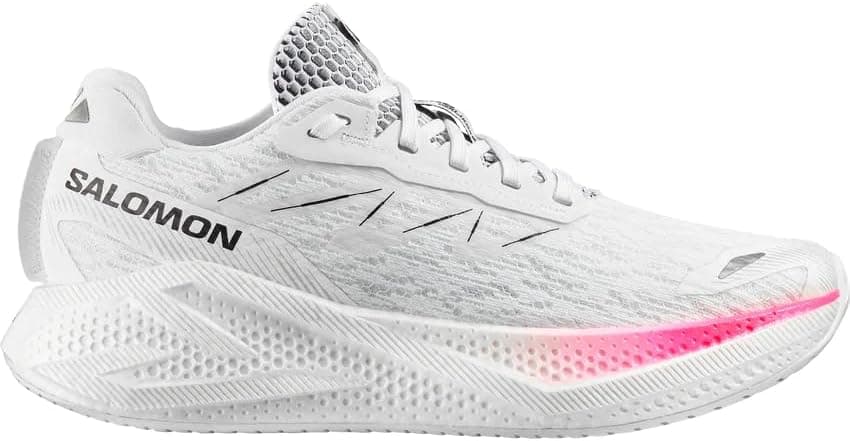


Salomon Aero Glide 4 Review
An aggregated overview based on reviewer and runner feedback.
Disclaimer: AI was used to help provide an unbiased perspective on this topic, and all content was carefully fact-checked and edited by human running-shoe analysts. It reflects aggregated opinions from reviewers and runners and does not represent firsthand testing. Learn more →
Overview & Quick Verdict
The Salomon Aero Glide 4 is a max-cushion daily trainer built around a single, well-executed idea: deliver as much cushioning as possible without paying the usual weight penalty. At 9 oz in a men's US 9 with a 42 mm heel stack, it sits in a category increasingly crowded with high-stack competitors — yet multiple independent reviewers flag it as one of the more surprisingly light entries in that group.
The shoe's defining upgrade over its predecessor is the OptiFOAM2 midsole, a supercritical eTPU compound that replaces the already well-regarded Energy Foam EVO from version 3. Lab testing at RunRepeat recorded energy return of 72.2% in the heel and 73.2% in the forefoot — figures that approach what is typically found in plated race shoes, not unplated daily trainers. On the run, reviewers across Doctors of Running, Road Trail Run, The Run Testers, and Believe in the Run consistently translate those numbers into a ride described as soft, bouncy, and more responsive than the category average.
Where the shoe earns its most consistent caveat is fit. The upper runs snug and narrow through the midfoot for many testers, and wet-road traction generates a genuine split in the review community — a point worth weighing carefully depending on your training environment and climate.
Key Stats
- Brand: Salomon
- Model: Aero Glide 4
- Category: Neutral max-cushion daily trainer
- Terrain: Road / paved surfaces; hard-packed paths
- MSRP: $160
- Weight: 9 oz / 256 g (men's US 9); 8 oz / 226 g (women's US 8)
- Stack Height: 42 mm heel / 34 mm forefoot (brand-stated); RunRepeat lab measured ~43 mm heel / 31.5 mm forefoot
- Drop: 8 mm stated; RunRepeat lab-measured 11.7 mm actual
Best For / Not Ideal For
Best For
- Neutral runners logging daily miles and long runs on roads or paved paths
- Heel strikers who benefit from the high actual drop (~11.7 mm measured) and deep rearfoot cushioning
- Mid-pack to back-of-pack marathoners and half marathoners seeking long-run protection at a non-premium price
- Runners who want a max-stack shoe they can occasionally push to moderate tempo efforts
- Those upgrading from the Aero Glide 3 — the platform is a safe, worthwhile step forward
- Narrow-to-medium foot runners who suit Salomon's snug last
Not Ideal For
- Wide-footed runners or those who need a roomy midfoot or toe box
- Forefoot or midfoot strikers — the high actual drop and rearfoot-heavy geometry favor heel striking
- Runners who frequently train on wet, slushy, or icy pavement (road version)
- Anyone seeking a plated speed trainer or technical trail shoe
Pros
- Unusually light for its stack. At 9 oz / 256 g with a 42 mm heel stack, the Aero Glide 4 is consistently described as "surprisingly light" across Doctors of Running, The Run Testers, Road Trail Run, RunRepeat, and RunToTheFinish — a defining trait in a category where most rivals feel heavier on foot.
- OptiFOAM2 delivers measurably high energy return. RunRepeat's lab recorded 72.2% / 73.2% energy return (heel/forefoot), placing it ahead of many super trainers; reviewers across sources translate this into a ride described as lively and bouncy rather than the dead or sluggish feel common to max-cushion shoes.
- Smooth, well-judged rocker. The Reverse Camber geometry earns consistent praise for guiding the foot through a natural heel-to-toe transition — rolling rather than forcing, without the aggressive or abrupt character found in some competitors.
- Versatile pace range. Despite its cushioning depth, multiple sources — including Road Trail Run and Doctors of Running — confirm it can handle moderate uptempo efforts and tempo sessions, making it more broadly useful than a pure recovery shoe.
- Strong value for a supercritical foam shoe. At $160, reviewers at RunRepeat and Road Trail Run note the performance-to-price ratio competes favorably with rival max-stack options that cost considerably more.
- Excellent shock absorption. RunRepeat lab recorded 152 SA at the heel and 120 SA at the forefoot, among the strongest results measured for any daily trainer.
Cons
- Narrow and snug through the midfoot and toe box. This is the most consistently cited limitation across sources: Doctors of Running flags a narrow midfoot; The Run Testers found the little toe cramped; Road Trail Run's Dominique described a glove-like lateral narrowness comparable to Salomon trail lasts; RunRepeat's lab confirmed an aggressively tapered forefoot geometry.
- Wet-road traction is a split result. Road Trail Run's multi-tester panel found the road outsole slippery on wet and icy pavement, with one tester recommending the GRVL version for winter conditions; RunRepeat's lab scored wet-concrete grip at 0.65, which it considers trustworthy — the discrepancy likely reflects the difference between controlled lab conditions and real-world mixed-surface winter running.
- High actual drop may not suit all runners. Salomon states 8 mm, but RunRepeat measured 11.7 mm in its lab — a meaningful gap that benefits heel strikers and those managing Achilles issues, but may feel excessive for midfoot or forefoot runners.
- Lateral flare can push the foot medially. Doctors of Running notes that the midsole's lateral flare extends unusually far outward, creating a tendency to push the foot toward the midline — a consideration for runners who prefer a more centered platform.
- Exposed medial heel foam shows early wear. Road Trail Run's Kelly observed visible wear on the exposed foam along the medial heel after just one month of testing — a durability note that warrants monitoring, particularly for runners who clip the inner heel on landing.
- Less airy than version 3. Doctors of Running notes the updated upper is more streamlined but less ventilated than its predecessor, which may be a factor for runners in warm or humid climates.
Ride & Feel
The OptiFOAM2 midsole is the central story of the Aero Glide 4, and the consensus from lab and field reviewers alike is that it delivers. The supercritical eTPU construction — expanded beaded TPU, similar in character to a lighter and bouncier Boost — produces a ride that Doctors of Running describes as soft yet responsive, with the foam compressing under impact and returning energy in a way that feels lively rather than neutral or dead. RunRepeat's lab measured energy return in the 72–73% range, placing it close to what is typically recorded for plated super shoes.
The Reverse Camber rocker geometry works smoothly in practice. Reviewers at Road Trail Run, Alastair Running, and Run Oregon consistently describe the heel-to-toe transition as natural and flowing rather than forced — the kind of geometry that accelerates the stride without calling attention to itself. At easy paces the shoe is forgiving and protective; as effort rises, the foam responds with increasing energy return, a characteristic that Road Trail Run's Maya found useful enough to use the shoe for tempo runs.
Ground feel is minimal, as expected from a 40+ mm stack. Runners used to more connected shoes will find the Aero Glide 4 isolates them from the road surface, which RunToTheFinish describes as a "floating" sensation — a genuine pro for high-mileage road runners, but potentially a limitation for those who rely on feedback from the ground.
Fit & Comfort
Sizing is widely reported as true to size in length across Doctors of Running, The Run Testers, Road Trail Run, and RunRepeat. The width story is more complicated. The lateral fit is consistently described as narrow or glove-like through the midfoot, a fit character Doctors of Running compares explicitly to Salomon trail lasts. Runners with average or narrow feet tend to find this secure; runners with wide feet or who need room for toe splay are cautioned across nearly every source.
There is some disagreement on whether the toe box is roomy or tight — Run and Become found a "roomy toe box," while The Run Testers found the little toe cramped. This divergence likely reflects foot shape differences rather than a genuine inconsistency in the shoe, and RunRepeat's lab confirmed the forefoot narrows aggressively toward the front of the shoe. Road Trail Run's testers note the shoe fits slightly long in their regular size, with a heel lock in the lacing helping to manage fit.
Step-in comfort from the midsole is broadly praised as immediate, with RunToTheFinish noting the shoe felt "soft but not squishy" out of the box. A smaller number of testers report tongue discomfort or lacing fussiness during runs, though this does not emerge as a dominant complaint in the primary specialist review outlets.
Support & Stability
The Aero Glide 4 is a neutral shoe, and it rides neutral throughout. The midsole platform is of moderate width — Road Trail Run measured 85 mm at the heel, 70 mm through the midfoot, and 105 mm at the forefoot — which provides reasonable rearfoot stability for a high-stack trainer. The heel is designed with embedded sidewalls that create a bucket-like cradle, which Doctors of Running credits with a "secure and predictable rearfoot experience."
The lateral midsole flare is the one stability caveat worth noting. Doctors of Running flags that it extends unusually far outward, which can create a tendency to push the foot medially and amplify the neutral character of the ride — the shoe effectively offers no guidance for runners who need it. Road Trail Run's Kelly also notes the high stack combined with the relaxed upper can make sharp lateral turns feel less secure, suggesting the shoe is best reserved for straight-line road running rather than technical surfaces or agility-dependent workouts.
Traction & Durability
The Road Contagrip outsole uses a perimeter rubber placement with exposed foam through the center — an arrangement that helps keep the shoe light but leaves some of the midsole's underside unprotected. In dry conditions, traction draws no meaningful complaints across sources, and RunRepeat's lab recorded a 0.65 wet-concrete grip coefficient, which it characterizes as confident in wet weather.
Field testing results on wet and icy pavement are less uniform. Road Trail Run's multi-tester panel flagged slipperiness on wet and icy road surfaces as a real concern for the road version, with one tester explicitly recommending the GRVL variant for winter use. This split between lab performance and real-world winter traction is worth factoring in for runners in cold or wet climates.
On durability, RunRepeat's lab testing found the toebox upper scored 2/5 in abrasion resistance — lower than ideal, though the TPU overlay around the toe area provides some structural protection. The heel padding scored a perfect 5/5. The more actionable durability flag from field testing is early visible wear on exposed medial heel foam, noted by Road Trail Run's Kelly after one month; this is an area to monitor over higher mileage.
Energy Return & Performance
The OptiFOAM2 upgrade from Energy Foam EVO (used in v3) represents a meaningful jump. RunRepeat's Energy Foam EVO measurements for version 3 exceeded 65% energy return, which was already competitive for a training shoe; the OptiFOAM2 compound in version 4 pushed that figure to 72–73% in both heel and forefoot — a result RunRepeat describes as "outstanding for a training shoe" and "remarkably close to what we usually see in premium super shoes."
In practice, reviewers translate this to a shoe that handles a wider range of training than most max-cushion options. Road Trail Run confirms it as suitable for tempo efforts; Doctors of Running tested it on the track and found it responsive. The Run Testers' Nick describes it as one of the better cushioned shoes of 2026; Kieran's caveat is that it lacks the fast, sharp rebound needed for truly quick work. The shoe earns its category-leading foam numbers; what it does not provide is the snappy, race-day feel of a plated shoe — nor does it claim to.
Final Verdict
The Salomon Aero Glide 4 makes a compelling case for itself on the most important metrics: the OptiFOAM2 midsole delivers genuinely high energy return, the shoe is meaningfully light for its stack height, and the Reverse Camber rocker produces smooth, efficient transitions that hold up across easy runs, daily mileage, and moderate tempo efforts. At $160, it undercuts several competing supercritical foam trainers while offering lab-measured performance that sits comfortably near the top of its category.
The caveats are real but specific. The narrow upper will exclude a meaningful share of runners — particularly those with wide feet or who expect the roomier lasts typical of max-cushion shoes from other brands. Wet-road traction on the road version is genuinely contested, not settled. And the high actual drop (~11.7 mm measured) means forefoot and midfoot strikers should approach with realistic expectations.
For heel-striking neutral runners logging steady daily miles on dry or dry-ish roads, the Aero Glide 4 is one of the stronger options in the max-cushion category and a legitimate under-the-radar standout at its price point. For everyone else, the fit and traction caveats are worth testing carefully before committing.
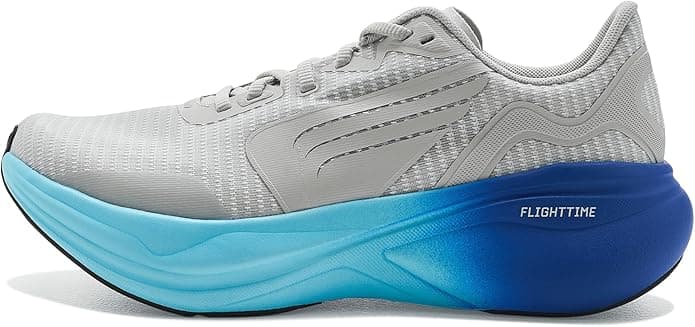
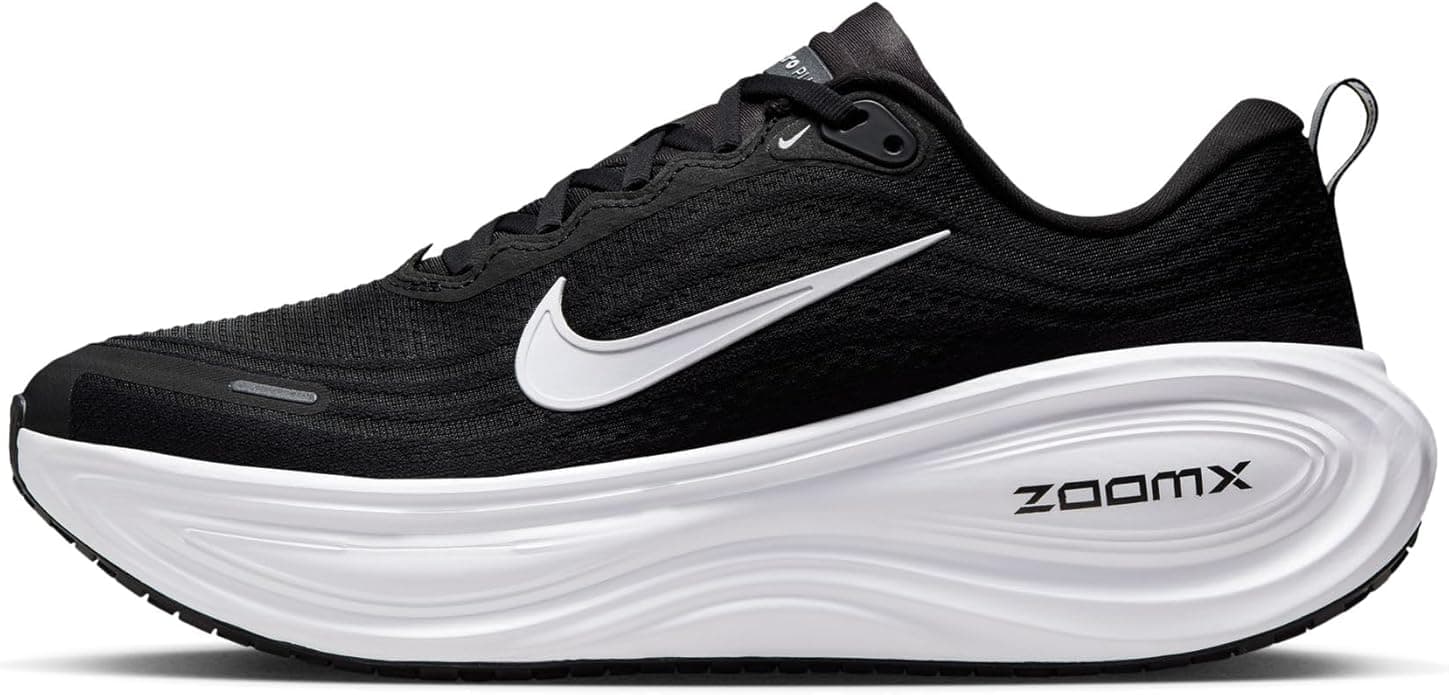
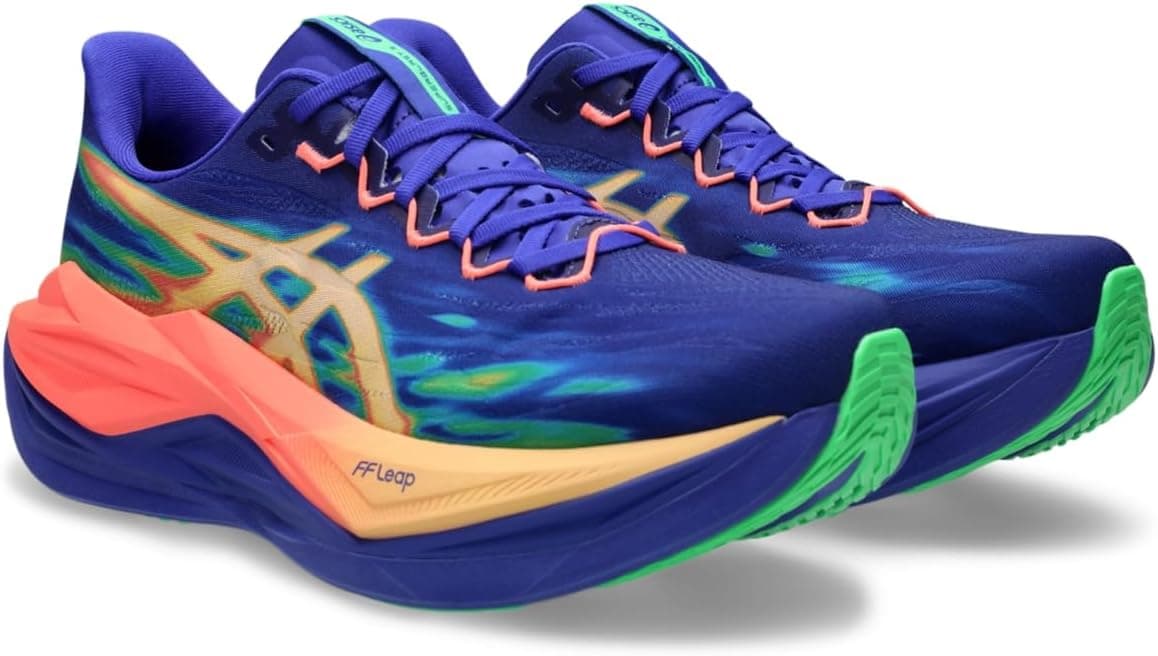
Alternatives to Consider
Not quite the right fit? Here are some shoes worth comparing.
Frequently Asked Questions
Yes, for most neutral heel strikers. The deep OptiFOAM2 cushioning and smooth rocker geometry make it well suited for long runs and high-mileage training blocks. Road Trail Run and Believe in the Run both frame it as a strong option for sustained daily miles. Runners who land toward the forefoot or who need guidance should look at alternatives, and the narrow fit means wide-footed runners should try before buying.
No. The Aero Glide 4 is an unplated daily trainer. Its performance comes entirely from the OptiFOAM2 supercritical eTPU midsole and Reverse Camber rocker geometry — no carbon or nylon plate is included.
Salomon states 8 mm, but RunRepeat's lab measured 11.7 mm in their cut-and-caliper testing. This discrepancy is meaningful: the shoe's geometry is genuinely high-drop in practice, which benefits heel strikers and runners managing Achilles or calf issues, but may feel excessive for forefoot or midfoot strikers.
Generally yes, especially through the midfoot. Doctors of Running, The Run Testers, and Road Trail Run all flag a snug, glove-like lateral fit that mirrors Salomon's trail shoe lasts. RunRepeat's lab confirmed the forefoot tapers aggressively toward the front. Runners with average or narrow feet tend to find it secure; wide-footed runners are consistently warned off across multiple sources.
The version 4 update is primarily an upper and foam revision. The OptiFOAM2 midsole improves on the Energy Foam EVO with measurably higher energy return (72–73% vs. 65%+ in v3 per RunRepeat). The upper is more structured but slightly less airy. The midsole platform geometry is largely unchanged. Fans of the Aero Glide 3 are broadly encouraged to upgrade across sources, with alastairrunning.com noting it feels like a more refined and complete version of the same formula.
Results are mixed. RunRepeat's lab scored wet-concrete traction at 0.65, which it considers reliable in wet weather. However, Road Trail Run's field testers found the road version slippery on wet and icy pavement, with one tester recommending the GRVL variant for winter use. For runners who frequently encounter wet or icy roads, the GRVL version — with its Gravel Contagrip outsole — is the more consistently recommended choice.
Yes in length — true-to-size is the dominant recommendation across Doctors of Running, The Run Testers, Road Trail Run, and RunRepeat. However, the shoe fits narrow through the midfoot and forefoot, so runners with wide feet or high insteps should try before buying or consider sizing up half a size, as some community testers have done.
Key Sources
Doctors of Running — https://www.doctorsofrunning.com/2026/02/salomon-aero-glide-4-review-2026.html
Road Trail Run (Road) — https://www.roadtrailrun.com/2026/02/salomon-aero-glide-4-review.html
Road Trail Run (GRVL) — https://www.roadtrailrun.com/2026/01/salomon-aero-glide-4-grvl-review-5.html
The Run Testers — https://theruntesters.com/salomon-aero-glide-4-review/
Believe in the Run — https://believeintherun.com/shoe-reviews/salomon-aero-glide-4-grvl-review/
RunRepeat — https://runrepeat.com/salomon-aero-glide-4
Trail & Kale — https://trailandkale.com/salomon-aero-glide-4-launch/
RunToTheFinish — https://runtothefinish.com/salomon-aero-glide-4-review/
Alastair Running — https://www.alastairrunning.com/salomon-aero-glide-4-review/
Tom's Guide — https://www.tomsguide.com/wellness/running/i-ran-55-miles-in-the-salomon-aero-glide-4-grvl-and-its-my-favorite-all-terrain-sneaker
Run and Become — https://www.runandbecome.com/running-product-reviews/shoes/salomon-aero-glide-neutral
Run Oregon (Road) — https://runoregonblog.com/2026/03/14/glide-on-salomon-aero-glide-4/
Run Oregon (GRVL) — https://runoregonblog.com/2026/03/31/salomon-aero-glide-4-grvl-same-smooth-ride-ready-for-the-detour/
Boulder Gear Lab — https://www.bouldergearlab.com/reviews/2026/02/21/salomon-aero-glide-4-grvl-review/
Running Warehouse — https://www.runningwarehouse.com/Salomon_Aero_Glide_4/descpage-SAGL4M3.html