
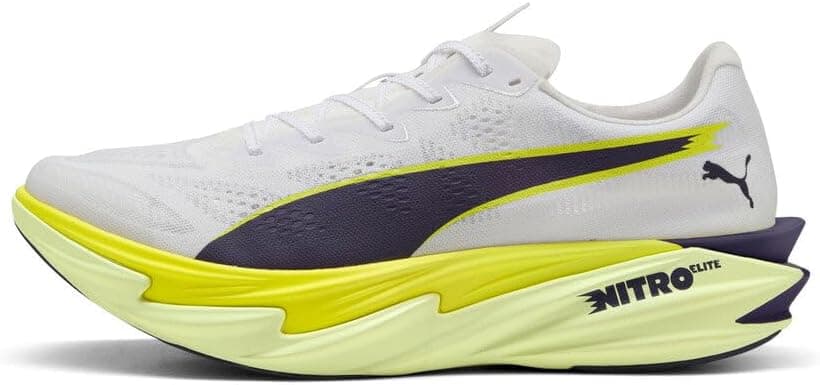


Puma Deviate Nitro Elite 4 Review
An unbiased look at what reviewers and runners are saying.
Disclaimer: AI was used to help provide an unbiased perspective on this topic, and all content was carefully fact-checked and edited by human running-shoe analysts. It reflects aggregated opinions from reviewers and runners and does not represent firsthand testing. Learn more →
Overview & Quick Verdict
The Puma Deviate Nitro Elite 4 is Puma's more accessible carbon-plated super shoe, positioned alongside — but deliberately more controlled and stable than — the aggressive Fast-R Nitro Elite 3. Released globally on February 26, 2026, it succeeds a version 3 that had earned a quiet cult following, and brings a roughly 30g weight reduction to match the featherweight Fast-R 3 while maintaining the more approachable, heel-and-midfoot-friendly geometry the Deviate line is known for.
The verdict across lab reviewers, multi-tester outlets, and long-form editorial sources is unusually cohesive: this is the best Deviate Nitro Elite Puma has made. Doctors of Running, Road Trail Run, Running Warehouse, and Believe in the Run all independently called it a true successor to the original, crediting the improved midsole feel, lighter build, and widened toe box as meaningful upgrades rather than incremental updates. Where critics focus, the concerns center on outsole coverage rather than the core ride — a notable shift from the v3's durability complaints.
The one significant split in the review ecosystem is around outsole durability at the medial heel, where Puma removed a rubber patch that existed in the v3. Some testers report visible wear within the first few runs; others treat it as a non-issue for a race-day shoe. That debate is the clearest caveat buyers need to weigh before purchasing.
Key Stats
- Brand: Puma
- Model: Deviate Nitro Elite 4
- Category: Carbon-plated super racing shoe
- Terrain: Road
- MSRP: $250
- Weight: 6.0 oz / 170g (men's US 9); 5.2 oz / 147g (women's US 8)
- Stack Height: 40mm heel / 32mm forefoot (official Puma/retailer spec); independent lab measurements range from 37–38mm heel / 28–30mm forefoot
- Drop: 8mm (official); 8.9mm (RunRepeat lab)
Best For / Not Ideal For
Best For
- Heel and midfoot strikers who want a carbon racer without aggressive, twitchy geometry
- Half-marathon and marathon runners in roughly the 3:00–4:30 finishing range who want a fast, yet controlled ride
- Runners new to carbon-plated shoes who want genuine race-day performance with a forgiving feel
- Wide or higher-volume feet — the updated toe box accommodates shapes that many super shoes cannot
- Value-conscious runners who want elite-tier weight and materials at $250 versus $300+ competitors
- Runners who train frequently in their race shoes — the shoe's stability and comfort make it viable for workout days, not just race day
Not Ideal For
- Dedicated forefoot strikers — the geometry and rocker favor heel and midfoot landings; forefoot runners are broadly directed toward the Puma Fast-R Nitro Elite 3
- Heavy medial heel strikers concerned about long-term outsole wear — the removed rubber patch is a real durability risk for this footstrike pattern
- Sub-3 hour marathon elites chasing the most aggressive, propulsive ride possible
- Runners with moderately to highly sensitive heels — the thin, unpadded heel counter is a known irritation point
- Anyone seeking a plush, easy-pace shoe or a daily trainer — this is a racing tool first
Pros
- Dramatic, felt weight reduction. The Elite 4 drops approximately 30g compared to the v3, bringing it to 170g / 6.0 oz in a men's US 9 — level with the Fast-R Nitro Elite 3 — and reviewers across Road Trail Run, RunRepeat, and Running Warehouse consistently describe the difference as immediately noticeable underfoot, not just a spec improvement.
- Outstanding value for a super shoe. At $250, it undercuts most carbon-plated competitors that offer comparable weight and foam technology, with Running Warehouse and Tom's Guide both noting that this level of performance would typically command $300 or more from other brands.
- Improved, energetic midsole. The updated ATPU NITROFOAM Elite compound is softer and bouncier than the v3's firmer setup, with RunRepeat's lab recording 77.4% energy return in the heel and 77.2% in the forefoot — numbers that place it firmly among the top-performing super-shoe foams currently available.
- Significantly wider toe box. RunRepeat measured 74.8mm at the toe box, and multiple sources confirm the fit is noticeably more accommodating than prior versions — a meaningful fix for runners who struggled with the v3's tighter forefoot on longer races.
- Upper fit and lockdown are universally praised. The ULTRAWEAVE mesh is described as breathable, lightweight, and disappearing once laced — Running Warehouse reported no hot spots, pinching, or insecurity across their full testing team, and Road Trail Run's Sam called it an upper he "forgets about" mid-run.
- Reliable PUMAGRIP traction in wet conditions. Despite reduced rubber coverage versus the v3, the PUMAGRIP compound on the forefoot and heel earns consistent praise for grip on wet asphalt, slick pavements, and greasy track surfaces (The Run Testers, Road Trail Run, Tom's Guide).
- More stable than most carbon racers. The shoe's moderate rocker, wider forefoot platform, and controlled foam tuning produce a geometry that multiple sources describe as confidence-inspiring — particularly compared to more aggressive racers like the Fast-R 3 or ASICS Metaspeed Sky Tokyo.
Cons
- Outsole durability is a live debate. Believe in the Run's Thomas — who used v3 pairs for 250+ miles — reported significant heel wear on the v4 after a single 10-mile training run, calling the outsole "unjustifiably thin." This remains a single-source severity claim, but it is worth noting against Running Warehouse's more permissive "race shoes aren't here for a long time" framing.
- Not the most aggressive or explosive feel in the segment. The Run Testers and Road Trail Run both note that shoes like the Fast-R 3, ASICS Metaspeed Sky Tokyo, and Hoka Cielo X1 3.0 feel faster underfoot, even if the performance gap narrows or reverses over a marathon's distance.
- Thin, unpadded heel counter. Doctors of Running (Matt Klein) specifically flags that the heel counter is unpadded and can irritate the heel — not a dealbreaker for most, but a hard stop for runners with moderately to highly sensitive heels or Haglund's concerns.
- Geometry rewards faster efforts; feel suffers at easy paces. Several reviewers note the shoe's carbon plate and foam tune don't cooperate well on warm-up or cooldown paces — it is a shoe that comes alive when runners push the effort, not one that coddles easy miles.
- Not suited for forefoot strikers. Doctors of Running (Andrea), Supwell, and Road Trail Run all explicitly advise forefoot runners toward the Fast-R 3, as the Deviate Elite 4's geometry and rocker are calibrated for heel and midfoot landings.
Ride & Feel
The defining characteristic of the Deviate Nitro Elite 4's ride is what reviewers call its "no-weirdness" geometry — a moderate rocker and stable ATPU platform that moves runners efficiently without the dramatic propulsion sensation of more aggressive super shoes. Believe in the Run (Meg) describes the propulsion as feeling like a natural extension of the running gait rather than a mechanically added boost, and Road Trail Run (Sally) reports pace splits arriving faster than perceived effort — the hallmark of an efficient race shoe working quietly in the background.
The updated dual-layer ATPU midsole is softer and more energetic than the v3's setup, with reviewers from Doctors of Running, Believe in the Run, and Running Warehouse all singling out the midsole improvement as the single biggest upgrade in this generation. The foam compresses on impact and snaps back meaningfully at speed, though it is worth noting that shuichi-running.com characterizes the ground feel as firm and slightly springy rather than soft — runners accustomed to ultra-plush foam like the Alphafly 3 will find the Deviate Elite 4 noticeably more substantial underfoot.
The forefoot rocker is present but measured. Road Trail Run and Supwell describe it as smooth and stable rather than dramatic, facilitating efficient transitions without the sense of being tipped forward that some runners dislike in more aggressively rockered racers. This calibration makes the shoe versatile across 5K through marathon distances — though it means elites chasing the fastest possible feel will look elsewhere.
Fit & Comfort
Sizing is consistently reported as true to size across all major review sources, with a slight caveat from The Run Testers and Tom's Guide that runners sitting between two sizes may do better in the smaller option. Running Warehouse noted the fit feels marginally more spacious than the Deviate Elite 3, and Believe in the Run (Meg) confirmed accommodating her wider foot without issue — a meaningful change from past Deviate generations.
The ULTRAWEAVE upper with PWRTAPE reinforcement earns near-universal praise. It is lightweight and breathable enough to avoid heat buildup on longer efforts, while the PWRTAPE overlays and serrated laces provide midfoot lockdown that most testers describe as snug without being restrictive. Road Trail Run (Sam) reported needing to lace quite tightly for his medium-to-narrow feet while still getting an excellent result — the fit works across a meaningful range of foot shapes.
The primary comfort caveat is the heel counter. Doctors of Running (Matt) describes it as thin and unpadded, capable of irritating the heel on longer runs for those with sensitivity in that area. This is not a widely reported issue across sources, but it is a consistent single-reviewer flag that buyers with heel concerns should investigate before committing.
Support & Stability
The Deviate Nitro Elite 4 is a neutral shoe, and Doctors of Running's detailed stability analysis describes it as working best as exactly that — not unstable, but without meaningful stability features beyond the forefoot geometry. The platform narrows through the midfoot and heel, which can feel slightly wobbly at slower speeds but resolves into confident transitions at race pace, where the quick forefoot rocker takes over.
RunRepeat's lab notes that the narrow rear platform may not be the best match for runners seeking a broad, inherently stable heel base, suggesting the Nike Alphafly 3 or Saucony Endorphin Pro 5 for those who need more confidence at the back of the shoe. Doctors of Running (Andrea) identifies a slight lateral bias in the forefoot rocker at toe-off, which benefits runners who naturally supinate slightly through push-off but may not suit those who need to pivot off the big toe.
For its weight and stack, the shoe is broadly considered stable by super-shoe standards. Road Trail Run (Sam) describes it as "remarkably stable and secure for such a light shoe," and Tom's Guide calls its stability a genuine differentiator against more aggressive racers — particularly for runners whose form degrades in the late miles of a marathon, where a chaotic heel geometry becomes increasingly difficult to manage under fatigue.
Traction & Durability
Traction from the PUMAGRIP compound is consistently praised across sources, with Road Trail Run reporting excellent grip during a 10K raced on a combination of salted wet roads and dry surfaces, and The Run Testers confirming reliable performance on slick pavements and a greasy track at race pace. RunRepeat's lab scored the PUMAGRIP at 0.69 on their traction scale — not top of their rankings but described as more than adequate for confident grip on wet asphalt.
The durability question is the most contested topic in the review ecosystem, split primarily along how-seriously-you-train-in-your-racers lines. Puma removed the medial heel rubber to save weight, leaving exposed foam in that zone — a change Road Trail Run documents in side-by-side outsole photos. Running Warehouse testers were unconcerned, framing the shoe explicitly as a race-day tool rather than a training workhorse. Believe in the Run's Thomas flagged alarming visible wear on the heel foam after a single 10-mile run, while The Run Testers reported no significant durability issues but acknowledged the missing rubber "isn't ideal."
The practical takeaway across sources: runners who use race shoes only for races and key workouts will likely find the outsole adequate. Heavy heel strikers who clock high training mileage in their super shoes should treat the outsole durability as a genuine concern and consider alternatives accordingly.
Energy Return & Performance
RunRepeat's lab recorded 77.4% energy return in the heel and 77.2% in the forefoot — figures that place the NITROFOAM Elite ATPU compound among the top-performing super-shoe foams in their database. This is consistent with Puma's broader track record with ATPU, which the brand has deployed across both the Deviate Elite and Fast-R lines to consistently strong lab results without relying on PEBA-based formulations used by most competitors.
On the run, the performance translates to a shoe that multiple reviewers describe as producing pace splits faster than perceived effort. Road Trail Run (Sally) reports a naturally energetic, full-of-rebound ride that doesn't feel mechanical, and Shuichi Running observed their warm-up pace climbing noticeably faster without additional effort — a concrete sign of the shoe assisting rather than inhibiting turnover. The shoe responds best at race effort, where the plate and foam work in concert, but handles moderate workout paces with enough competence to function as a training tool alongside a dedicated tempo shoe.
Where the performance story has a ceiling is at the very top end of the super-shoe spectrum. The Run Testers, Tom's Guide, and Running Warehouse all acknowledge that the Fast-R Nitro Elite 3, ASICS Metaspeed Sky Tokyo, and Hoka Cielo X1 3.0 deliver a more electric, aggressive ride sensation. Whether that sensation translates to meaningfully faster race outcomes for any individual runner is a separate question — but buyers seeking the most wildly propulsive feeling available at any price will need to look beyond the Deviate Elite 4.
Final Verdict
The Puma Deviate Nitro Elite 4 is the best version of this shoe Puma has built, and a legitimate top-tier option in an increasingly competitive super-shoe market at $250. The weight reduction is real and felt, the midsole upgrade is the clearest step forward in the series, the fit is more accommodating than any prior Deviate Elite, and the value proposition against $300+ competitors is difficult to argue against. For heel and midfoot strikers targeting a half marathon through marathon, it earns its place on the shortlist without qualification.
The outsole durability debate is the unresolved thread buyers need to evaluate honestly against their own usage patterns. The shoe is unambiguously designed as a racing tool, and Running Warehouse's framing — that it is "here for a fast time, not a long time" — is probably the fairest characterisation of the outsole trade-off. Runners who rotate shoes properly and reserve this for races and quality sessions are unlikely to encounter meaningful issues; those who want to log high training mileage in one shoe should prioritise durability data from Believe in the Run's 100-mile follow-up before committing.
For the majority of recreational competitive runners, particularly those who have found more aggressive super shoes unstable or intimidating, the Deviate Nitro Elite 4 represents Puma making a genuinely compelling case to be taken seriously in the race-day space — not just as a budget alternative, but as a shoe worth choosing on its own merits.
Alternatives to Consider
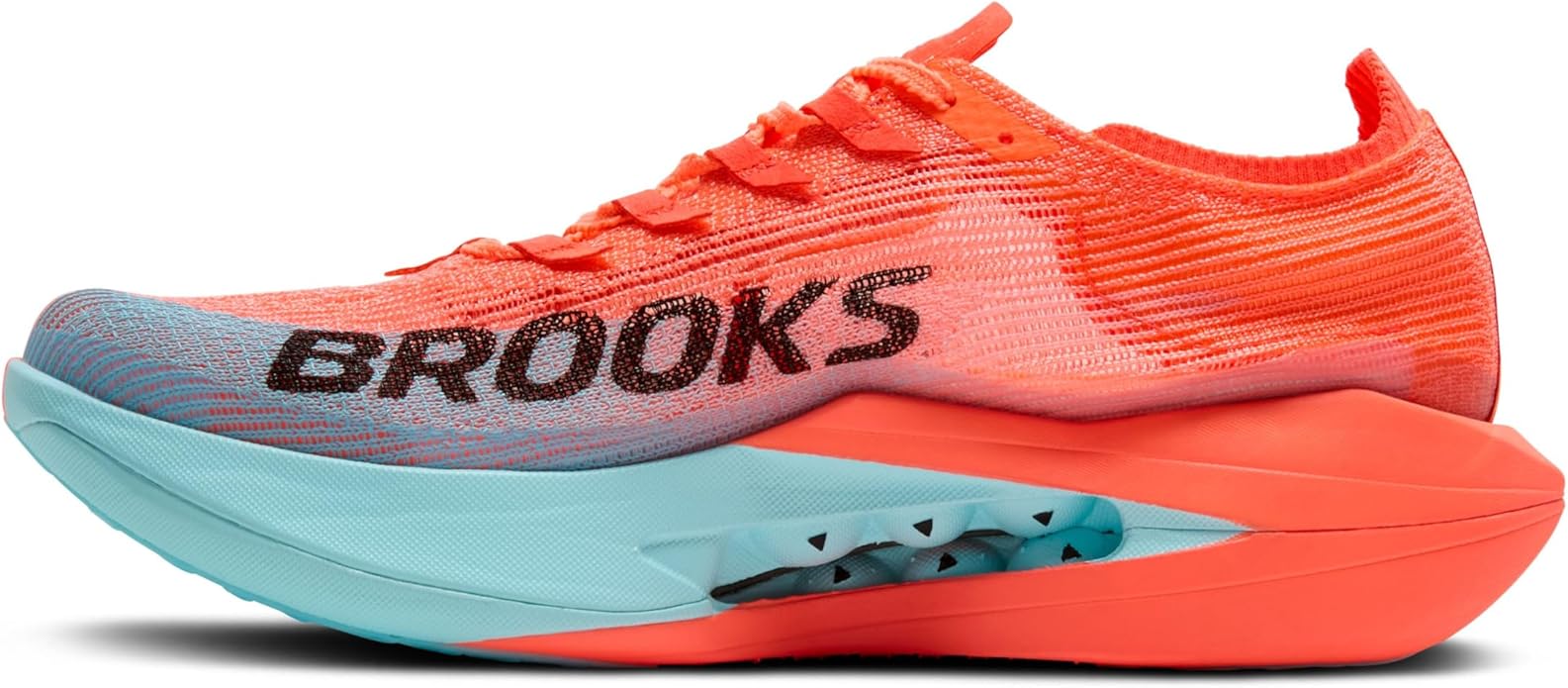
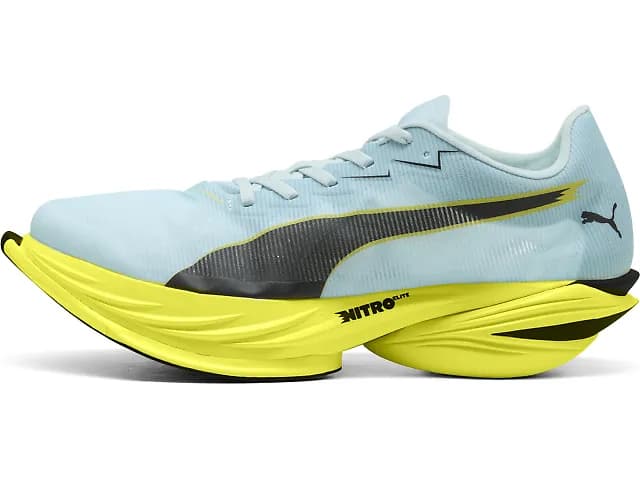
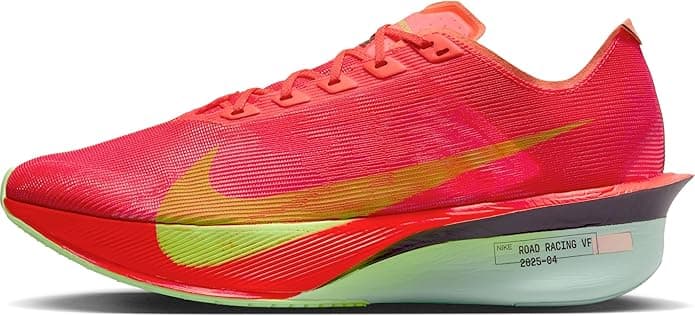
Not quite the right fit? Here are some shoes worth comparing.
Frequently Asked Questions
Both shoes share the same NITROFOAM Elite ATPU foam and similar weight (170g), but they are built for different runners. The Fast-R 3 uses a more aggressively rockered, decoupled midsole geometry that rewards forefoot strikers and faster runners (sub-3 hour marathon pace and beyond). The Deviate Elite 4 has a more moderate rocker and stable platform that suits heel and midfoot strikers across a wider pace range, roughly 3:00–4:30 marathon. If you are new to super shoes or want a more controlled ride, the Deviate Elite 4 is the better starting point. If you want the most aggressive Puma has to offer and land toward the front of your foot, choose the Fast-R 3.
Yes — reviewers across Running Warehouse, Doctors of Running, Road Trail Run, and The Run Testers consistently report it fits true to size. If you are between two sizes, The Run Testers and Tom's Guide both suggest going with the smaller option for a better performance fit. The fit is wider and more accommodating than the Deviate Nitro Elite 3, so runners who sized up in prior versions to accommodate a wider foot may be able to return to their normal size.
It depends on how you use the shoe. The geometry, rocker profile, and foam tuning are all set up to work well for heel and midfoot strikers — more so than the Fast-R 3, which is explicitly optimized for forefoot landing. However, the removal of the medial heel rubber in the v4 is a meaningful durability concern for heavy heel strikers who log significant mileage in their race shoes. If you land hard on the inner heel and plan to train regularly in this shoe, the exposed foam in that zone will wear faster than in the v3.
This is the most debated question in the review ecosystem. Puma removed the medial heel rubber to save weight, leaving exposed foam in that area. Running Warehouse testers were unconcerned and frame the shoe as a race-day tool. Believe in the Run's Thomas reported visible heel wear after a single 10-mile training run and described the outsole as unjustifiably thin. The Run Testers reported no significant issues but noted the missing rubber is not ideal. The practical guidance from most sources: reserve this shoe for races and quality sessions, not daily training mileage.
Puma's official spec and Running Warehouse both list 40mm heel / 32mm forefoot, giving an 8mm drop. Independent lab measurements from RunRepeat recorded 37.2mm heel / 28.3mm forefoot (8.9mm drop), and Doctors of Running cite 38mm / 30mm. These discrepancies are common in shoe reviewing and relate to measurement methodology — whether the insole is included, where the measurement is taken, and the specific testing tool used. The shoe sits very close to the World Athletics maximum for road racing (40mm) across all measurement methods.
Yes, with appropriate expectations. Multiple sources — including Road Trail Run, The Run Testers, and Running Warehouse — describe it as capable of handling uptempo workouts, longer tempo runs, and even 18+ mile long runs. It is more training-friendly than the Fast-R 3, which is harder to use for anything outside pure racing. That said, the shoe rewards faster effort and feels best at tempo pace and above; easy-day runs are functional but not where the shoe shines. Given the outsole durability concerns on the medial heel, most reviewers recommend limiting routine easy-day use to preserve the shoe for when it matters.
Key Sources
Running Warehouse (Full Review) — https://www.runningwarehouse.com/reviews/puma-shoe-reviews/puma-deviate-nitro-elite-4.html
Doctors of Running — https://www.doctorsofrunning.com/2026/03/puma-deviate-nitro-elite-4-review-2026.html
Believe in the Run — https://believeintherun.com/shoe-reviews/puma-deviate-nitro-elite-4-review/
Road Trail Run (Multi-Tester) — https://www.roadtrailrun.com/2026/01/puma-deviate-elite-4-multi-tester.html
Road Trail Run (Nils Solo Review) — https://www.roadtrailrun.com/2026/02/nils-puma-deviate-nitro-elite-4-review.html
RunRepeat (Lab Review) — https://runrepeat.com/puma-deviate-nitro-elite-4
The Run Testers — https://theruntesters.com/puma-deviate-nitro-elite-4-review/
Tom's Guide — https://www.tomsguide.com/wellness/running/puma-deviate-nitro-elite-4-review
Run to the Finish — https://runtothefinish.com/puma-deviate-nitro-elite-4-review/
Shuichi Running — https://shuichi-running.com/en/puma-deviate-nitro-elite-4-review/
Supwell — https://www.supwell.com/supbeat/puma-deviate-nitro-elite-4-overview-and-first-run-review
The Running Channel — https://therunningchannel.com/puma-nitro-elite-4-review/
Fordy Runs — https://www.fordyruns.com/post/puma-deviate-nitro-elite-4-review
EddBud (YouTube) — https://www.youtube.com/watch?v=ZmTswZYi0gw
EddBud Comparison (YouTube) — https://www.youtube.com/watch?v=gf3f6HzaKEk
Puma Official Product Page — https://us.puma.com/us/en/pd/deviate-nitro-elite-4-mens-road-running-shoes/312127