


Adidas Hyperboost Edge Review
An unbiased look at what reviewers and runners are saying.
Disclaimer: AI was used to help provide an unbiased perspective on this topic, and all content was carefully fact-checked and edited by human running-shoe analysts. It reflects aggregated opinions from reviewers and runners and does not represent firsthand testing. Learn more →
Overview & Quick Verdict
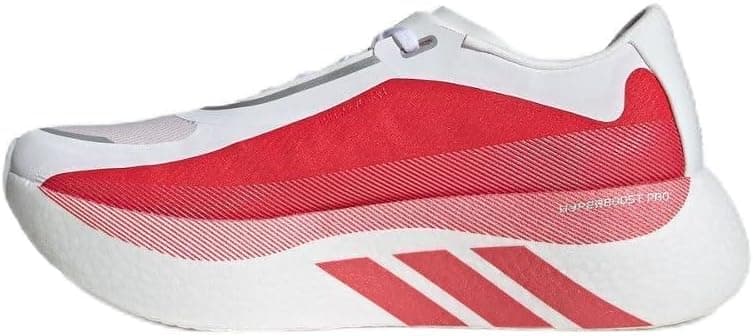
The Adidas Hyperboost Edge is the brand's long-awaited entry into the non-plated super-trainer category, and it arrives with a genuinely new midsole material rather than a recycled formula. Built around Hyperboost Pro — a PEBA-based, pelletized foam derived from the same Lightstrike Pro compound found in Adidas's elite race shoes — it positions itself directly against the ASICS Megablast, Superblast 3, and Nike Vomero Plus.
Across lab reviews, long-term testers, and enthusiast outlets, the verdict on the midsole is nearly unanimous: the foam delivers. Reviewers consistently describe the ride as soft, bouncy, and surprisingly stable for its stack height, with lab measurements placing its energy return among the highest recorded for any super trainer. The shoe earns its hype underfoot.
Where the consensus fractures is on the upper. The Primeweave construction — stiffened with multiple overlays and a high, rigid heel collar — draws consistent criticism for breathability, entry difficulty, and collar discomfort during runs. The foam may be the story, but the upper is the caveat runners need to weigh carefully before buying.
Key Stats
- Brand: Adidas
- Model: Hyperboost Edge
- Category: Neutral max-cushion super trainer
- Terrain: Road
- MSRP: $200
- Weight: 8.9 oz / 255g (men's US 8.5)
- Stack Height: 45 mm heel / 39 mm forefoot
- Drop: 6 mm
Best For / Not Ideal For
Best For
- Neutral runners seeking max cushioning and high energy return without a plate
- Long runs where comfort and bounce are the priority
- High-mileage training blocks
- Runners who want a versatile daily trainer that can also handle moderate tempo efforts
- Fans of the original Boost aesthetic who want a modern, performance-grade update
Not Ideal For
- Runners who need a wide or high-volume toe box
- Those with sensitivity to stiff, rigid heel collars
- Runners who prefer ground feel or a flexible midsole
- Hot-weather runners who need a breathable upper
Pros
- The Hyperboost Pro foam delivers among the highest measured energy return of any non-plated super trainer, with lab testing placing it above even the ASICS Megablast in return percentage.
- Light for its stack height — approximately 8.9 oz in a men's 8.5 — thanks to the efficiency of the PEBA-based pelletized foam.
- Full-length LIGHTTRAXION outsole provides consistent grip on wet and dry road surfaces while adding durability protection that many competing super trainers skip.
- Versatile pace range — reviewers report it works well from relaxed recovery runs all the way through threshold-effort training sessions.
- An aggressive forefoot rocker promotes smooth, efficient toe-off and gives the shoe a dynamic, rolling feel through the stride.
- The foam becomes more responsive as pace increases, rewarding runners who push the effort rather than penalizing slower efforts.
Cons
- The stiff, high heel collar digs into the lateral ankle area for many runners, a near-universal complaint across sources.
- Poor breathability due to the multi-overlay Primeweave upper — reviewers consistently flag this as a significant issue in warm weather.
- A tapered, low-volume toe box creates a race-snug fit that is not well suited for runners with wide feet or those who need room for toe splay.
- Thin laces with limited grip make secure tying difficult on the run.
Ride & Feel
The Hyperboost Pro midsole is the defining element of this shoe, and it performs in a way that distinguishes it from both previous Adidas Boost models and the slab-style foams used in many current rivals. The pelletized construction creates a ride that reviewers describe as controlled and bouncy simultaneously — softer on impact than a traditional firm super trainer, but more stable and less wallowy than some plush alternatives.
A late-stage forefoot rocker contributes meaningfully to the ride feel. It engages aggressively near toe-off, giving transitions a forward-rolling, almost propulsive character that suits runners who spend time at moderate-to-fast efforts. At easy paces, the shoe is forgiving and cushioned; as pace increases, it responds with additional energy return.
Ground feel is minimal. The combination of nearly 45mm of foam in the heel and a full outsole layer means runners feel well removed from road surfaces — a plus for those logging high mileage on hard pavement, but a limiting factor for runners who prefer a connected feel.
Fit & Comfort
Sizing is consistently reported as true to size across multiple independent review sources, with the last running slightly wider than typical Adidas performance shoes. Runners with medium-width feet report a secure and comfortable fit; those with wide feet or high insteps are more frequently flagged as poor candidates due to the low volume through the forefoot and the structural rigidity of the overlays.
The gusseted tongue and full-length midfoot wrapping provide solid lockdown, though reviewers note the laces are too thin and slippery to stay tight reliably. The heel padding design — two high internal bolsters framing the Achilles — is positively noted for keeping pressure off the tendon, even as the outer collar itself draws criticism for rubbing the lateral ankle during longer efforts.
Comfort divides cleanly along upper-versus-midsole lines. Step-in comfort from the foam is widely praised. Comfort from the upper — particularly around the collar and in warmer conditions — is one of the most consistent criticisms in the review ecosystem.
Support & Stability
Given its stack height, the Hyperboost Edge is notably stable. Reviewers across lab and field sources attribute this to the density characteristics of the Hyperboost Pro foam itself, which is firmer and more controlled than its soft ride feel would suggest. The full-length LIGHTTRAXION outsole also acts as a structural base layer, reducing the tendency toward platform roll that affects some high-stack competitors.
The platform width at the heel — measured around 90mm in lab settings — is narrower than some rivals, which draws occasional comments about wanting more support at the back of the shoe for heel-heavy footstrike patterns. The shoe is not recommended for heavy pronators who also heel-strike far behind center, as the combination of height and platform narrowness can create instability in those cases.
For neutral runners with efficient mechanics, though, the stability story is largely positive and stands out as a meaningful differentiator in its category.
Traction & Durability
The full-length LIGHTTRAXION outsole is one of the Hyperboost Edge's clearest strengths after the midsole. Multiple reviewers commend it for grip across wet tiles, wet asphalt, and general road conditions, with some noting that the coverage is unusually complete compared to super trainers that expose large foam sections to save weight. Lab abrasion testing records very low material loss, and early long-term testers report negligible visible wear after 100km.
The choice of a CPU (polyurethane-based) outsole rather than traditional rubber keeps weight down while delivering broad coverage — an engineering tradeoff that appears to work well in practice, though long-term durability beyond 500–600km is yet to be documented. The beaded foam construction also has a track record of strong durability based on earlier Boost products, adding confidence in the midsole's longevity.
Energy Return & Performance
Lab testing at RunRepeat recorded a 73.6% energy return result for the Hyperboost Pro foam, placing it ahead of nearly every other non-plated super trainer and, notably, above the ASICS Megablast — a shoe that has served as a benchmark in the category. That figure is among the highest recorded for a plate-free training shoe and validates the core performance claim Adidas made at launch.
On the run, the performance translates to a shoe that handles a wide range of training types. Reviewers report using it effectively for easy runs, long runs, progression runs, and even threshold sessions. The foam responds with increasing energy as effort rises, which creates a rewarding feel at moderate-to-fast paces that is uncommon in max-cushion trainers. For dedicated racing or the fastest interval work, the shoe feels slightly awkward, but as a training tool it is broadly capable.
The absence of a plate does not meaningfully limit performance in the trainer context. Reviewers consistently note that the foam's natural stiffness and the rocker geometry do enough work to create efficient transitions without the assistance of a plate.
Final Verdict
The Adidas Hyperboost Edge succeeds where it matters most: the midsole is genuinely excellent and represents a meaningful advancement for Adidas in the super trainer segment. Hyperboost Pro foam earns its claims with measured energy return numbers to match, and the full-coverage outsole and stability characteristics round out a mechanically strong shoe.
The unresolved issue is the upper. A stiff heel collar, poor breathability, and a difficult entry experience are not minor niggles — they surface repeatedly across sources of all types, from clinical lab reviewers to community runners on forums. For many runners, these will be manageable; for others, especially those training in warm climates or with collar sensitivity, they may be dealbreakers.
As a version 1.0, the Hyperboost Edge is a strong debut. The hardware is there. If Adidas addresses the upper in a subsequent version, this platform becomes one of the most compelling in the category.
Alternatives to Consider
Not quite the right fit? Here are some shoes worth comparing.
Frequently Asked Questions
Yes, for most neutral runners. Its high-stack Hyperboost Pro foam handles easy days and moderate long runs well, and its versatility across paces makes it suitable for varied training blocks. Runners who heel-strike heavily or need stability features may want to pair it with a more structured shoe for high-mileage days.
No. The Hyperboost Edge is Adidas's first non-plated super trainer. It relies entirely on the Hyperboost Pro PEBA-based foam for cushioning, energy return, and structural support — no carbon or plastic plate is included.
Lab testing places the Hyperboost Edge slightly ahead of the Megablast in energy return. The Megablast is generally described as faster and bouncier on the run, while the Hyperboost Edge offers slightly more stability and comfort for easy paces. The Megablast is also a touch lighter and more expensive. Both are strong options, but the Adidas has the edge in stability and the ASICS in outright speed feel.
Yes. Reviewers across multiple sources consistently report it runs true to size, with a slightly wider fit than typical Adidas performance shoes. However, the low midfoot volume and stiff upper can feel snug for runners with high insteps or wide feet — trying before buying is advised if you fall into those categories.
The Primeweave upper features a stiff, high heel collar with minimal lateral padding. Multiple reviewers report it digs into the ankle — particularly the lateral side — during extended runs. It is one of the most consistently cited criticisms of the shoe. Runners with Achilles sensitivity may find the internal bolster design helpful, but the outer collar remains a known friction point.
Early durability signs are strong. Lab abrasion testing shows very low material loss from the LIGHTTRAXION outsole, and reviewers who have logged 100km+ report negligible visible wear. The full-coverage design also protects the foam from direct ground contact, which is expected to extend overall shoe lifespan compared to super trainers with exposed foam sections.
Key Sources
RunRepeat — https://runrepeat.com/adidas-hyperboost-edge
Doctors of Running — https://www.doctorsofrunning.com/2026/03/adidas-hyperboost-edge-review-2026.html
Believe in the Run — https://believeintherun.com/shoe-reviews/adidas-hyperboost-edge-review/
Road Trail Run (Multi-Tester) — https://www.roadtrailrun.com/2026/03/adidas-hyperboost-edge-in-depth-review.html
Road Trail Run (100km Review) — https://www.roadtrailrun.com/2026/03/nils-100km-adidas-hyperboost-edge-super.html
Outside Online — https://run.outsideonline.com/gear/road-shoes/adidas-hyperboost-edge-review/
The Run Testers — https://theruntesters.com/adidas-hyperboost-edge-review/
Tom's Guide — https://www.tomsguide.com/wellness/running/adidas-hyperboost-edge-review
Gear Patrol — https://www.gearpatrol.com/outdoors/adidas-hyperboost-edge/
Footwear News / WWD — https://wwd.com/footwear-news/sneaker-news/adidas-hyperboost-edge-release-date-2-1238651616/
Supwell — https://www.supwell.com/supbeat/grading-the-adidas-hyperboost-edge
Sustain Health Magazine — https://sustainhealth.fit/lifestyle/adidas-hyperboost-edge-review/
Reddit / r/RunningShoeGeeks — https://www.reddit.com/r/RunningShoeGeeks/