Best Easy / Recovery Running Shoes of 2026
An aggregated overview based on expert reviewer picks and runner feedback across a wide range of sources.
Disclaimer: AI was used to help aggregate and summarize information from multiple sources. All content was carefully fact-checked against current expert reviews and reflects consensus opinions rather than a single tester's experience. Learn more →
Your easy and recovery days are not afterthoughts. For most runners, 70–80% of all miles should be at a genuinely easy effort — and the shoe you choose for those miles matters. The right recovery shoe protects tired muscles from additional pounding, discourages unconscious pace creep through excessive bounce, and keeps you fresh for the hard sessions that actually drive adaptation.
What you're looking for is different from a fast trainer: maximum cushioning depth, a full or near-full rubber outsole, and a foam that absorbs impact without demanding you push through it. Speed is irrelevant here. Freshness at the end of the run is the only metric.
Best Easy / Recovery Shoe Overall — Nike Vomero Plus
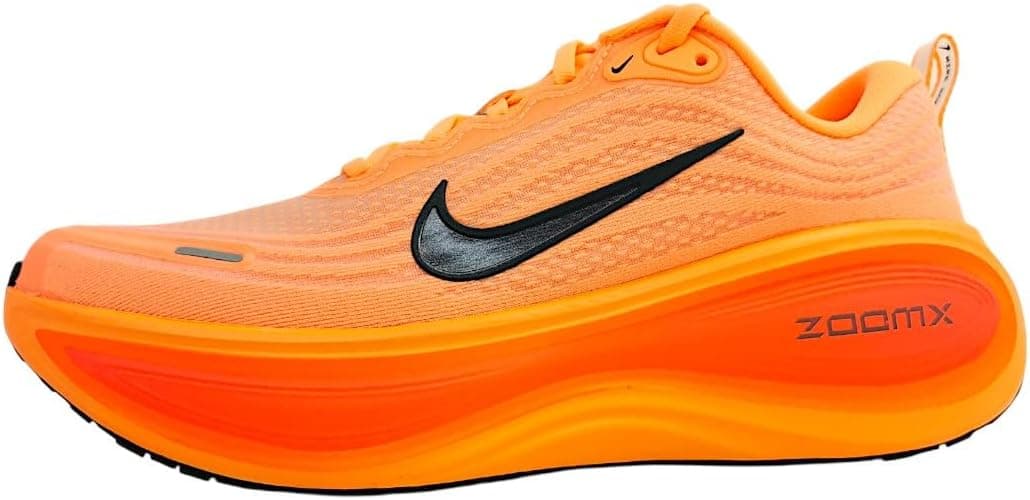
Solereview put it cleanly: the Vomero Plus delivers best-in-class max-cushioning for recovery runs and long runs at easy paces — fine-tuning the midsole design and ZoomX foam does a much better job of unlocking the potential of the ZoomX midsole, making it more versatile. RunRepeat's lab testing confirmed the physics: their shock absorption reading of 147 SA in the heel and 131 SA in the forefoot dwarfs the Nike Pegasus 41's 125/92 SA. The energy return of 67–69% ranks near the top of the daily trainer category — enough bounce to feel lively without pushing you to run faster than intended.
Believe in the Run's Meaghan wore the Vomero Plus for every single run during her time in Paris for the Breaking4 event. She called it perfect for easy daily miles, recovery runs after tough workouts, or even an easy long run — with its soft step-in feel and energetic, cushioned ride, it delivers everything you'd expect from a true max-cushioned recovery shoe. Doctors of Running logged 100 miles in the shoe and praised the bouncy, comfortable ride that handles some variation of paces — super durable and consistent throughout.
The caveat: The Vomero Plus is built around heel strikers — forefoot and midfoot strikers won't get as much from the cushioning concentration in the heel. The fit is also known to run a bit narrow. Those with wide feet will likely want to stay away.
Best Recovery Shoe for Beginners — Hoka Bondi 9
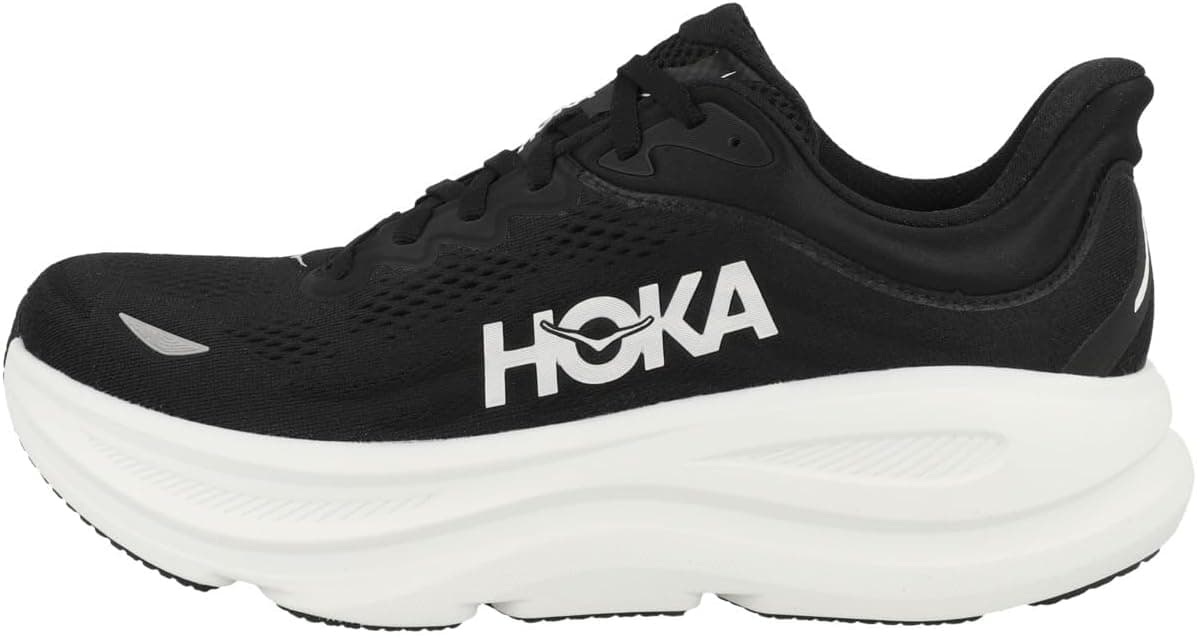
The Hoka Bondi is the defining reference point for max-cushion road running — and the 9th version is its best. RunRepeat confirmed the key upgrade: energy return jumped from 51.0% to 60.2% after switching from old-school compression-molded EVA to modern supercritical EVA — a massive improvement. The new foam is bouncier while maintaining the structured, non-mushy feel that has always been the Bondi's defining characteristic.
Road Trail Run's Sam — who describes having barely been able to run in the Bondi 8 due to its dull, quite firm, heavy, and stiff ride — found the Bondi 9 a delight across a variety of paces, calling it a significant update that moves from a plodder best suited to slow running to a relatively light super max cushion run trainer. At 0.9 oz lighter than the Bondi 8 and with notably better energy return, the Bondi 9 returns the OG of max cushion to the front of the pack.
For beginners especially, the Bondi 9's wide platform and natural stability work in their favor. RunRepeat confirmed the forefoot measures 127mm versus the 113mm industry average, with the wide base providing inherent stability without the need for intrusive motion control. Running Lab's Joe summed up the beginner use case: the Bondi 9 is a great upgrade to the Bondi lineup — if the previous version left you feeling unsure, the Bondi 9 hits the mark, offering plush cushioning without feeling too clunky.
The caveat: Despite real improvements in energy return, the supercritical EVA still leans on the firmer side of plush — not a marshmallow, more plush-but-structured. Running Shoes Guru flagged the narrow upper as a persistent issue: if you have very wide feet, the narrow upper will be too uncomfortable — get the wide version or go up half a size. At 10.5 oz, don't expect it to help your pace. That's not its job.
Best Budget Recovery Shoe — ASICS Novablast 5
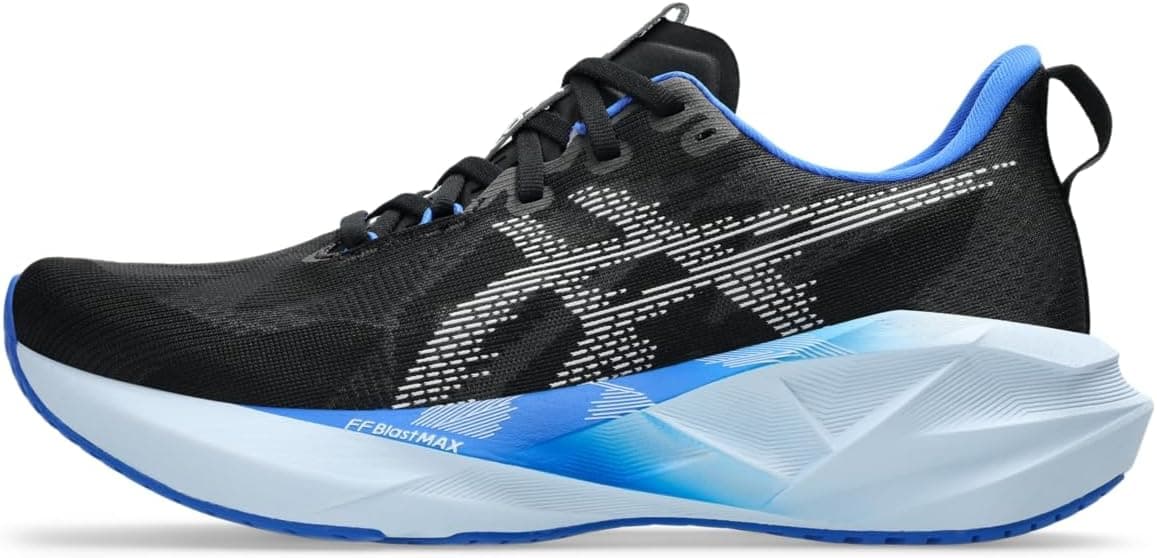
The ASICS Novablast 5 earns the budget recovery slot by delivering 41.5mm of FF Blast MAX foam at $150 — noticeably cheaper than most max cushion options. Road Trail Run called the v5 lighter, more comfortable, and more lively than its predecessor, and RunRepeat's lab measured shock absorption figures that compete with shoes costing $20–30 more, confirming the foam upgrade is real.
WearTesters praised the Novablast 5 specifically for comfortable recovery runs, describing it as a well-priced, energetic daily running shoe that keeps legs fresh on back-to-back training days. The wide, stable platform and predictable 8mm drop make it easy to run slowly in — the shoe doesn't demand a forceful push-off the way a more aggressive rocker geometry can, which matters when legs are genuinely tired.
The caveat: The Novablast 5 is softer and more energetic than a pure recovery shoe — Running Shoes Guru warned that runners who prefer a firm, muted midsole for easy days may find the v5 subtly encourages picking up the pace. RunRepeat also noted grip falls short on wet surfaces. For those who want the deepest possible shock absorption at this price range, the Hoka Bondi 9 provides more muffled cushioning — the Novablast 5 is better characterized as a versatile daily trainer that handles recovery days well rather than a dedicated max-cushion recovery tool.
Full budget running shoe guide →
Best Recovery Shoe for Wide Feet — New Balance 1080 v15
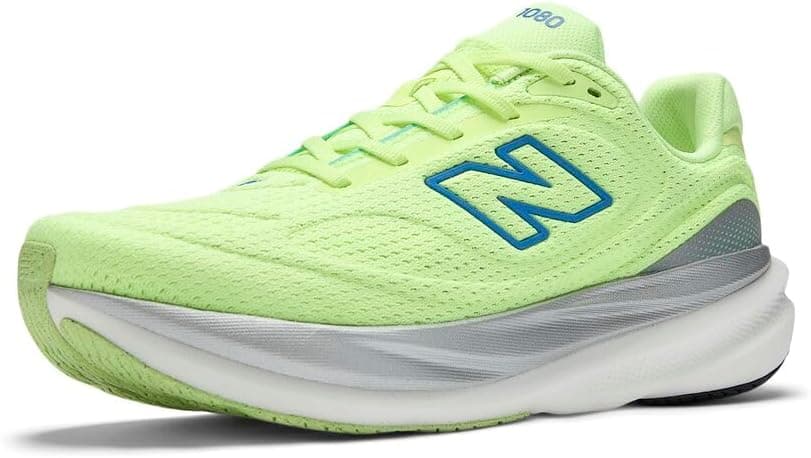
New Balance's 1080 line has earned its reputation as a wide-foot friendly premium daily trainer across 15 versions, and the v15 is the most significant evolution in years. The entire Fresh Foam X midsole has been replaced with Infinion — a new supercritical nitrogen-infused compound. Doctors of Running found the result genuinely impressive: taking back its place as the lightest premium neutral trainer on the market, the 1080 v15 returns as a light, highly cushioned, and resilient shoe — with the knit upper providing a ton of extra room for those who need a high-volume upper.
Believe in the Run's Meaghan ran a side-by-side comparison on the same run, v14 on one foot and v15 on the other: the new version feels better overall, the upper is softer and smoother, and the ride feels a touch more responsive, while also dropping significantly in weight. Tom's Guide confirmed the men's drop: 9.2 oz in size 9.5 versus 10.1 oz for the v14. Canadian Running's reviewer found the Infinion foam addressed the core complaint of the old Fresh Foam: the midsole feels more responsive and slightly firmer, with no more heel smashing into the foam — you get plenty of cushioning, but it's stopped losing responsiveness after high mileage.
The caveat: The 1080 v15 is not inherently wide in standard sizing — the wide and extra-wide versions are what make it a genuine wide-foot recommendation. The Infinion foam, while more responsive than Fresh Foam, is still decidedly easy-run oriented. Running Northwest found that at very slow jogs, the lateral heel can feel a bit firm for heavy heel strikers. The exposed midsole sections on the outsole mean it should be kept on roads and away from trails.
Best Stability Recovery Shoe — ASICS Gel-Kayano 32
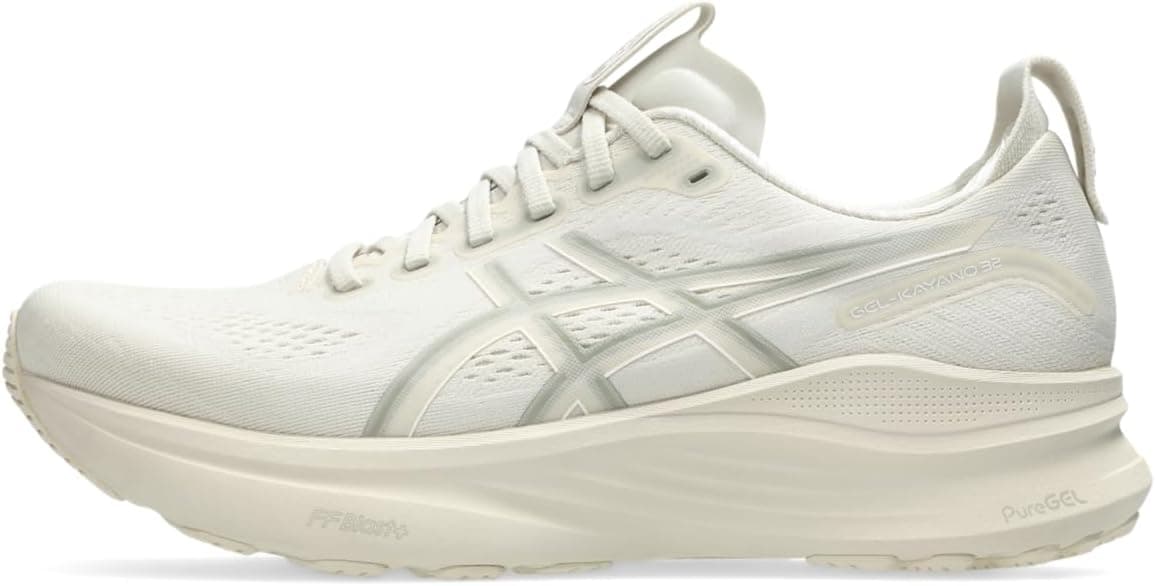
The Gel-Kayano is one of the longest-running stability shoe lineups in running — now in its 32nd iteration and still the clearest answer for overpronators who need maximum protection on easy and recovery days. The big update in version 32 is the drop reduction from 10mm to 8mm — a meaningful change that RunRepeat confirmed as real, calling it a smart move as most brands trend away from over-10mm drops.
Believe in the Run's Lindsay focused on what the shoe does best on recovery days: the Kayano 32 is a daily trainer she would consider for any run other than speed work, with an emphasis on recovery runs — the 4D Guidance System provides adaptive support without feeling intrusive. Doctors of Running confirmed the design rationale: the 4D guidance system in the midfoot helps bounce the arch into and out of pronation — a wider sole, sidewalls, internal geometry, and midsole geometry that all work together to make this a highly stable shoe without a rigid medial post.
Alastair Running found what makes the Kayano 32 uniquely suited to recovery mileage: the 4D Guidance System provides adaptive support that noticeably corrects overpronation without feeling too intrusive — it doesn't lock the foot into a rigid motion path but instead adjusts in real time, offering support when fatigue sets in or when form starts to waver. The Run Testers confirmed it works well for both overpronators and neutral runners alike.
The caveat: The Kayano 32 is heavy and deliberately not fast — running faster feels like a chore. RunRepeat also found the low energy return notable: the foam leans on the firmer side of plush, meaning it absorbs but doesn't actively bounce you forward the way the Vomero Plus does. For runners seeking livelier stability, the Saucony Hurricane 25 offers more midsole bounce. The Kayano is for those who want quiet, guided protection above all else.
Best Trail Recovery Shoe — Hoka Challenger 8
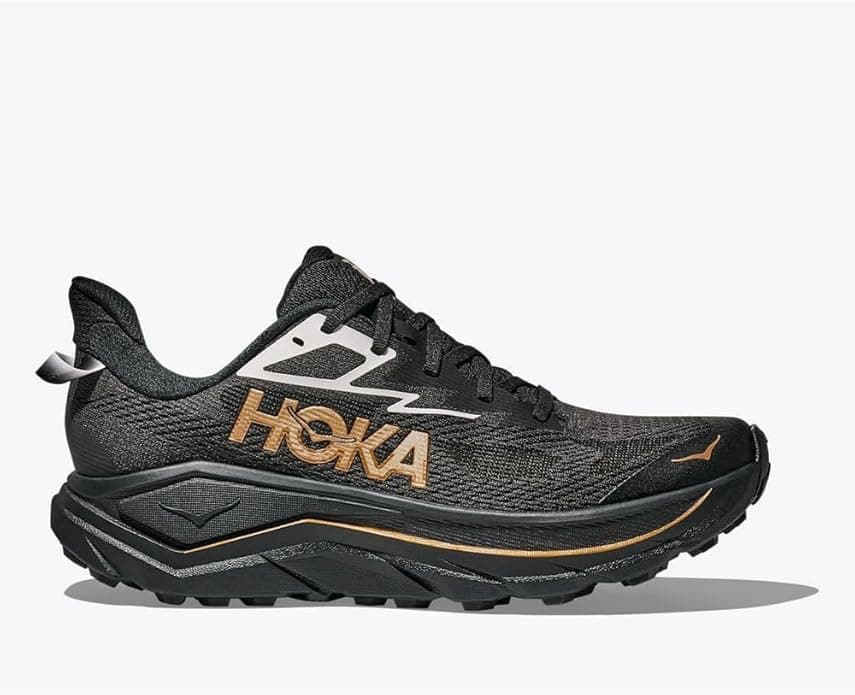
The Hoka Challenger 8 is the shoe you reach for when you want max cushioning on a run that starts on pavement and ends on a trail — or vice versa — and you'd prefer not to think about footwear at all. Better Trail's reviewer summed up how this shoe found its permanent place in the rotation: after racing a 100K, this was the shoe they wanted on their feet as they eased back into running — the soft cushion and impact absorption felt like a salve for tired legs.
RunRepeat's lab work confirmed the version 8 upgrade is substantial: shock absorption jumped from 131/101 SA in version 7 to 152/116 SA in version 8. Despite that massive increase in stack, RunRepeat measured a remarkably flexible result in their 30-degree bend test — a shoe that stays supple underfoot even at 42mm. iRunFar's Bryon Powell logged over 160 miles across snow, mud, and creek crossings, praising the shoe's roomy toebox, soft cushioning, and versatile application on pavement, gravel, and dirt.
The caveat: The Challenger 8 has hard limits. Outdoor Gear Lab found noticeable edge collapse on cambered trails and reduced confidence when descending or changing direction — the higher stack amplifies softness without adding structural support. The standard CMEVA foam, while soft, lacks the energy of premium superfoams and is not especially springy. For technical trail racing or aggressive terrain, look at the Hoka Tecton X3 instead. For trail recovery and easy effort miles on mellow surfaces, the Challenger 8 is excellent.
When to Use a Dedicated Recovery Shoe
Not every runner needs a separate recovery shoe — if you're running three days a week, your daily trainer is sufficient for all your runs. But if any of the following apply, a dedicated recovery shoe is worth the investment:
You run five or more days a week. At that volume, rotating shoes extends the life of each pair and lets each midsole fully re-expand between uses. A dedicated shoe for easy days also prevents you from unconsciously running faster because a lively midsole is encouraging pace.
You're in high-mileage marathon or ultra training. The back-to-back long run weeks that build endurance also accumulate impact damage. A maximally cushioned shoe on easy days is part of how elites manage load across multi-week blocks.
You're coming back from injury. Maximum cushioning reduces joint stress and ground reaction forces. The Bondi 9, Vomero Plus, and Kayano 32 all carry American Podiatric Medical Association recognition for exactly this reason.
Your legs are still sore from yesterday's workout. If your legs hurt going into a run, running in a shoe that muffles that feedback protects you from unconsciously altering your gait in ways that create new problems.
Related Guides
- Best Running Shoes of 2026 (All Categories) →
- Best Daily Trainers of 2026 →
- Best Long Run Shoes of 2026 →
- Best Running Shoes for Beginners →
- Best Budget Running Shoes →
- Best Running Shoes for Wide Feet →
- Best Stability Running Shoes →
- Best Trail Running Shoes →
Find Your Perfect Shoe
Every shoe on this list is excellent — but there is no 'best shoe for everyone' only a 'best shoe for you'. What works for a neutral heel-striker running on roads is completely different from what a wide-footed, forefoot striking, trail runner needs. Take our quick quiz to get personalized recommendations matched to how you actually run.
Key Sources
RunRepeat — https://runrepeat.com/nike-vomero-plus
RunRepeat (Best shock absorption Nike shoes guide) — https://runrepeat.com/guides/best-nike-all-day-wear-running-shoes
Believe in the Run (Nike Vomero Plus review) — https://believeintherun.com/nike-vomero-plus-review/
Believe in the Run (New Balance 1080 v15 review) — https://believeintherun.com/new-balance-1080-v15-review/
Believe in the Run (ASICS Gel-Kayano 32 review) — https://believeintherun.com/asics-gel-kayano-32-review/
Doctors of Running (Nike Vomero Plus review) — https://www.doctorsofrunning.com/2025/09/nike-vomero-plus-review.html
Doctors of Running (New Balance 1080 v15 review) — https://www.doctorsofrunning.com/2025/10/new-balance-1080-v15-review.html
Doctors of Running (ASICS Gel-Kayano 32 review) — https://www.doctorsofrunning.com/2025/08/asics-gel-kayano-32-review.html
Road Trail Run (Hoka Bondi 9 review) — https://www.roadtrailrun.com/2025/01/hoka-bondi-9-review.html
Running Shoes Guru (Hoka Bondi 9 review) — https://www.runningshoesguru.com/reviews/road/hoka-bondi-9-review/
RunRepeat (ASICS Novablast 5 review) — https://runrepeat.com/asics-novablast-5
Doctors of Running (ASICS Novablast 5 review) — https://www.doctorsofrunning.com/2024/11/asics-novablast-5-review-2024.html
Road Trail Run (ASICS Novablast 5 review) — https://www.roadtrailrun.com/2024/11/asics-novablast-5-iniital-review-fun.html
The Run Testers (ASICS Gel-Kayano 32 review) — https://theruntesters.com/asics-gel-kayano-32-review/
iRunFar (Hoka Challenger 8 review) — https://www.irunfar.com/hoka-challenger-8-review
SoleReview (Nike Vomero Plus review) — https://www.solereview.com/nike-vomero-plus-review/
Tom's Guide (New Balance 1080 v15 review) — https://www.tomsguide.com/reviews/new-balance-1080-v15
Better Trail (Hoka Challenger 8 review) — https://bettertrail.com/hoka-challenger-8-review
Canadian Running (New Balance 1080 v15 review) — https://runningmagazine.ca/sections/gear/new-balance-1080-v15-review/
Outdoor Gear Lab (Hoka Challenger review series) — https://www.outdoorgearlab.com/reviews/shoes-and-boots/trail-running-shoes/hoka-challenger
Alastair Running (ASICS Gel-Kayano 32 review) — https://www.alastairrunning.com/asics-gel-kayano-32-review/